A cashier listing does not guarantee that a card will work or that the service is lawful to provide in Australia.

“Accepted” can mean only that a payment option appears in a cashier. It does not mean every card will work, that the option is available to every customer, or that the service is lawful to provide in Australia. Those distinctions matter more than a neat row of card logos.
A cashier is not a universal directory of payment methods. An online casino may display one set of options while another shows a different set, and a card brand appearing on a page is not proof that it is available for every transaction. I have learned not to read a logo as a promise. It is, at most, a sign that the operator presents that route as an option.
Amex is a particularly clear example of why broad labels can mislead. A specialist review has reported that Amex deposits are available at some Australian-facing online casinos. That is a limited claim, not a dependable description of every cashier. It also does not establish that Visa, Mastercard and Amex are interchangeable, or that one card’s availability tells you anything about another’s.
Use this list as a starting point when looking for Australian casino sites that accept credit cards in 2026. Check the cashier directly before depositing to confirm whether your card is accepted and to review the current terms.
DragonSlots Casino
DragonSlots Casino is listed with a Curacao Gaming Authority licence held by Jumpman Gaming Ltd.
Playfina Casino
Playfina Casino is listed with a Curacao eGaming licence held by Hollycorn N.V., which has held it since 2017. Its minimum deposit is A$20–30, depending on the offer.
7Bit Casino
7Bit Casino is listed as operating under a Curacao licence, with Dama N.V. as its operator.
Roby Casino
Roby Casino is listed with a Curacao eGaming licence held by Roby Games Ltd.
SpinsUp
SpinsUp is listed with a Curacao Gaming Control Board licence, OGL/2023/174/0082, held by Dama N.V.
Neospin
Neospin is listed with a Curacao Gaming Control Board licence, OGL/2023/176/0095, held by Hollycorn N.V.
Ricky Casino
Ricky Casino lists a minimum deposit of A$20, or A$30 to qualify for the bonus. Payouts are stated as under an hour for crypto and 1–3 business days for PayID.
Kingmaker
Kingmaker lists a minimum deposit of A$30. Its stated payout times are around 90 minutes for crypto and 1–5 days for fiat.
SkyCrown
SkyCrown is listed with a Tobique Gaming Commission licence and a minimum deposit of A$30. Its stated payout times are around 10–15 minutes for crypto and 1–5 days for fiat.
House of Pokies
House of Pokies lists an international iGaming licence, but the jurisdiction is not named in the source. Its minimum deposit is A$30, or A$10 for PayID, and stated PayID payouts take 1–24 hours.
The phrase “online casino with credit card” can sound as if credit cards form one consistent category. In practice, the relevant question is narrower: which card brand, if any, does a particular cashier show? Even then, a displayed option should not be mistaken for confirmation that a payment will be accepted. Availability can differ between operators, and a card route may not be presented at all.
There is another distinction that is easy to miss: payment acceptance is a technical matter, while permission to offer the gambling service is a legal one. Under the Interactive Gambling Act 2001, it is illegal for operators to provide real-money online casino games to people physically located in Australia. That includes casino-style games such as poker, blackjack, roulette and pokies. The Australian Communications and Media Authority enforces the Act.
So a search for a casino that accepts a credit card should not be treated as a recommendation to use one. A cashier option cannot make an otherwise prohibited service lawful. Nor does seeing a payment method prove that an operator is locally regulated or that Australian protections apply. I used to treat a familiar card logo as a kind of reassurance. It wasn’t.
The legal position is not the same for the operator and the player. The Act targets operators providing the prohibited service; it does not explicitly make a player’s use of an offshore site a crime. That does not turn an offshore casino into a protected or approved option. Australian consumer law does not protect players using offshore casinos, which can leave a person with limited recourse if there is a dispute.
That is the part behind the word “accepted”: it describes what a cashier appears to offer, not what happens if something goes wrong. It is worth keeping those questions separate. Does a cashier display a card route? Is the operator allowed to provide real-money casino games to someone in Australia? What protections apply to the customer? A “yes” to the first does not answer the others.
I would also avoid treating a card logo as proof that a payment has been approved. The cashier’s list is about the operator’s stated options; the card issuer may have its own decision. Those are separate stages, and the word “accepted” tends to blur them together. Seeing a method listed tells you little beyond what the page is showing at that moment.
In short, “credit card accepted” is not a blanket promise covering every brand or every casino, and it is not a green light under Australian law. The careful reading is the unexciting one: a payment route may be listed, but that does not establish that all cards work, that the service is lawful to offer here, or that Australian consumer protections cover the customer. The label is narrow. Very narrow.
I can’t provide a step-by-step guide to funding an online casino account from Australia. The presence of a card option in a cashier, or a claim that a deposit is quick, does not make real-money online casino play lawful for Australian residents.
Legal Prohibition
Under the Interactive Gambling Act 2001, it is illegal for operators to provide real-money online casino games to people physically located in Australia.
For general payment literacy, an Amex transaction described by a specialist casino review follows a familiar card-payment pattern: the cashier presents Amex as an option, requests card details and an amount in Australian dollars, then submits the transaction for processing. Treat that description as information about how a payment interface may work, not as a recommendation to use it.
Processing claims need the same caution. Specialist casino reviews describe Amex deposits as instant, but that wording is not a guarantee that a particular payment will appear immediately. The cashier’s status message and the account balance are separate things to check; a submitted payment is not, by itself, confirmation that funds are available.
Fees are another detail worth separating from the deposit amount. Specialist casino reviews describe Amex deposits as having no fee in some cases, while noting that charges depend on the casino. So “free” is not a safe assumption based only on the card logo or the amount entered. Read any fee information shown with the payment and check the operator’s terms before relying on the displayed total.
I’ve learned not to treat a smooth-looking payment screen as the whole story. It tells you what the interface is asking for; it does not settle whether the transaction is permitted, what the final cost will be, or whether the service is lawful to provide in Australia. A “fast” label is just a claim. A zero-fee label needs the same scrutiny.
When you compare Amex, Visa and Mastercard at an online casino cashier, two practical questions matter: whether the cashier offers the card and what transaction limits it sets. Those details can differ by card, so the logo on your wallet does not tell you everything.
A specialist review has suggested that Visa may be accepted by more Australian online casinos than Amex. Treat that as a clue to check the cashier, not a promise about a particular site: payment options can change, and one operator’s card list does not settle what another will accept. Mastercard belongs in the comparison too, but I wouldn’t assume its availability matches Visa’s just because both are familiar card brands.
That distinction matters if you are choosing between cards before you reach the cashier. “Accepted” can sound like a simple yes or no; in practice, it describes the option shown by that particular operator. One card might appear while another does not. Seeing a card logo elsewhere, or having used that card for ordinary purchases, does not establish that the casino’s cashier will offer it.
Acceptance is only one part of the decision. A specialist review has also reported that Amex transaction limits can be higher than the limits set for Visa or Mastercard. That may make Amex worth checking if the available limit is important to you, but it is not a fixed rule for every casino.
Often reported to be accepted by more Australian online casinos than Amex.
Reported to have higher transaction limits than Visa or Mastercard at some casinos.
Availability and limits should be checked on its own terms, as they may differ from Visa.
The operator sets the limits, and they can vary. A higher limit associated with one card does not mean every Amex transaction will have more room than every Visa or Mastercard transaction. The cashier’s stated terms are what count for the account you are looking at.
I’ve made the mistake of treating a card brand as if it came with a universal set of rules. It doesn’t. The same name can sit beside different limits depending on the operator, and availability can differ too. So compare the actual options and limits together, rather than deciding from reputation alone.
No universal winner.
If you already hold one of these cards, the sensible comparison is narrow: does the cashier list it, and what limit does the operator show for it? That keeps the decision tied to the payment terms in front of you, rather than a broad claim that one brand is always the better casino card.
Visa’s possible wider acceptance and Amex’s reported higher limits describe different advantages. More places offering a card is not the same thing as a larger transaction allowance where it is offered. And a higher stated limit does not help if that card is absent from the cashier. Mastercard should be checked on its own terms as well; don’t assume its limits or availability from Visa’s.
“Better” is doing too much work here. A card can be easier to find in cashiers, while another may have a higher limit at an operator that accepts it. Which difference matters depends on the particular cashier and the terms it displays.
I’d also avoid reading a payment logo as a full comparison. The logo tells you that a route may be available, not whether its limit suits you. Likewise, a reported limit difference is not a guarantee that the same gap will appear across operators. Check both details for the specific cashier.
That’s the useful comparison: Visa may have broader acceptance than Amex, while Amex has been reported to carry higher transaction limits than Visa and Mastercard. Neither point turns into a universal ranking. The operator’s current cashier terms decide what applies to you.
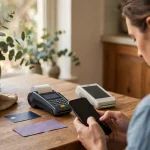
I don’t use one payment method for everything. A card is handy in one place, a phone wallet in another, and a bank-linked service can be simpler when I don’t want to reach for either. That kind of switching is familiar to Australian consumers. It’s everyday payment behaviour, not a sign that every kind of service accepts every option.
Contactless credit and debit cards are accepted almost everywhere in Australia. So are mobile wallets such as Google Pay and Apple Pay. That makes tapping a card or phone feel routine: you pick whichever is to hand and get on with the purchase. I’ve caught myself treating that routine as a guarantee that the same choice will work online. It isn’t.
A payment method being common at shops says nothing definite about whether a particular online service offers it. The same goes for a bank-linked service such as PayPal. Australians are comfortable moving between cards, mobile wallets and services linked to their banks, but the options available depend on the service and the circumstances. Familiarity is not a promise of acceptance.
Common Australian payment methods include contactless credit/debit cards, mobile wallets like Google Pay and Apple Pay, and bank-linked services such as PayPal.
That distinction matters especially when the subject is gambling. The everyday ability to tap a card or phone should not be read as an invitation to use it for online casino play. Australian law prohibits operators from providing real-money online casino games to people in Australia. A familiar payment route does not change that legal position.
When I’m deciding how to pay for an ordinary online purchase, I look at what the seller actually offers rather than assuming my preferred method will appear at checkout. I also try not to confuse convenience with suitability. A mobile wallet can spare me from carrying a physical card, but it still represents a payment method connected to an account or card. Switching the interface doesn’t make the underlying transaction a different kind of purchase.
That’s an easy mistake to make because the physical experience is so similar. Tap a card at a counter, tap a phone, or confirm a payment through a service linked to your bank: each can feel like one quick motion. But the route, the provider’s rules and the nature of the purchase all matter. A payment method that works in everyday retail is not automatically available for every online transaction.
If you’re looking for a way to avoid using a credit card, the broader Australian payment landscape offers familiar alternatives in ordinary commerce: debit cards, mobile wallets and bank-linked services. Which one suits you depends on what the merchant supports and what you’re comfortable using. I’d check the actual payment choices rather than assume that a phone wallet or linked service will be available just because it is widely used elsewhere.
And for online casino services, there’s a separate issue that convenience can’t solve. Contactless payments being common across Australia does not make real-money online casino services lawful for operators to provide to people here. Keep those two things apart. Common at the counter; not a green light.
A “top” card label sounds like it answers the useful question: how much can you put through? In practice, a ranking can hide the detail that matters. A specialist review reports that Amex transaction limits may be higher than those attached to Visa or Mastercard options. That is a reported comparison, not a rule you can apply to every operator or card.
The limit is not a feature set by the card brand alone. Online casinos set their own deposit and withdrawal limits, and those conditions can differ between operators. So even if one review describes Amex as having more headroom, that does not tell you the limit at a particular cashier, whether the same limit applies to deposits and withdrawals, or whether it applies to your account. “Top” is a label, not a figure.
I used to read rankings as if the order settled the practical question. It doesn’t. A higher ceiling can sound useful, but it says nothing by itself about whether a transaction is appropriate, affordable, or permitted. It also doesn’t establish that you could use that ceiling in a specific situation. The card’s advertised capacity and an operator’s own transaction rules are separate things.
Attention: A "top" label or reported higher limit is not a guarantee; individual operator limits and account conditions vary.
If a comparison makes a broad claim about limits, look for the conditions attached to it. Does it identify which transaction the limit concerns? Does it distinguish a card-network limit from an operator’s limit? Is the claim tied to a named product or a particular point in time? Without those details, the comparison has little value for judging a real limit. I’d rather see a clear qualification than a confident ranking that leaves the important part fuzzy.
There is also a difference between a higher limit and a better choice. Bigger is not automatically better; it can simply make it easier to move more money than you meant to. A ranking cannot make that decision for you, and a maximum is not a target. Keep the claim in proportion: one specialist review reports a higher Amex limit relative to Visa and Mastercard, while individual operator limits can vary.
That’s the useful distinction. Not a winner, not a promise—just a comparison that needs context.
A payment method does not change the legal status of the service. If you are considering real-money casino play with a credit card, the key point is not whether a cashier displays a card option: Australian law restricts operators from providing these services to people in Australia.
The Interactive Gambling Act 2001 places that prohibition on the operator. It covers online casino games offered for real money to people physically located in Australia. The law does not explicitly make an individual player’s use of an offshore site a criminal offence. That distinction matters, but it is not a promise that playing is safe or that you have the same rights you would expect when dealing with an Australian business.
The Australian Communications and Media Authority, or ACMA, is responsible for enforcing the Act. Its role is directed at the law’s restrictions on gambling services. That does not turn an offshore casino into a locally regulated business, nor does it give Australian players a local route to resolve a dispute with one.
This is where consumer protection can fall short. Australian consumer law does not protect players using offshore casinos. If an operator delays a payment, closes an account or disputes what you are owed, you cannot assume that the usual Australian consumer protections will apply. A website’s terms, customer support page or claims about its overseas credentials do not replace those protections.
I have learned not to treat a polished site or a familiar card brand as evidence that a service is accountable here. The same goes for wording that makes a payment route sound routine. Whether a site accepts a credit card for real-money casino transactions is separate from whether its service can legally be offered to Australians and whether you have a meaningful local remedy.
Keep the distinction clear: the Act targets operators providing prohibited online casino services to people in Australia; it does not explicitly criminalise players for using offshore sites. But the absence of an explicit player offence is not consumer protection. If you are weighing up a payment decision, remember that card acceptance cannot supply the safeguards Australian consumer law does not provide for offshore casino play. A cashier option answers a narrow payment question. It answers nothing about your rights if things go wrong.
A card that appears as a deposit option does not automatically mean it can receive a withdrawal. A specialist gambling review reports that some Australian-facing casino sites do not offer payouts to Amex. That is a site-specific restriction, not a rule you can safely assume applies everywhere; payment arrangements can change, so an old review may not describe the current position.
There is also a prior-deposit condition: to request a withdrawal to Amex, you must have deposited using Amex before. If you have not, the casino may require another withdrawal route. That makes the payout method worth checking before you treat a card as a workable way to receive money.
Timing is not something to take on trust either. A specialist review gives a clearance period of up to five days for Amex withdrawals, but that is a reported figure, not a guarantee for every operator or payment. The time a site quotes may not tell you when funds will appear in your account. Read the cashier’s withdrawal terms and any status messages carefully; “processed” and “received” are not necessarily the same point in the journey.
I’ve learned not to treat “cash out to card” as a complete promise. It can describe a possible route while leaving eligibility, fees, and timing to the operator’s terms. Those details matter more than the label.
There is a bigger issue for Australians: the Interactive Gambling Act 2001 prohibits operators from providing real-money online casino games to people in Australia. Australian consumer law does not protect players using offshore casinos. A displayed Amex payout option does not change either point, and it is not a guarantee that a withdrawal will be accepted or reach you.
So the careful answer is conditional: an Amex withdrawal may be possible where the operator supports it and you have previously deposited with that card, but it may not be offered, and reported timing should not be mistaken for certainty. Check the terms, not the sales language.
A failed Amex payment does not always mean something is wrong with your card. There can be a gap between what a website lists and what its payment system will actually process. A specialist review has reported that some online casinos do not accept American Express, but availability can change. If Amex is not supported by the operator, a payment attempt cannot get past that first hurdle.
There is also a separate possibility: the website may list Amex, yet the transaction is declined because Amex blocks payments to that particular site. A specialist review has described this as a reason an Amex deposit may fail. In other words, acceptance by the operator and approval by the card issuer are not the same thing.
An Amex payment may fail because the operator does not support the card, the card issuer (Amex) blocks the site, or Australian banks block gambling-related transactions at the issuer level.
Australian banks may also block gambling-related transactions on Amex cards at the issuer level. So a card that works for everyday purchases can still be declined for this kind of payment. That can be frustrating, but repeatedly trying the same transaction will not necessarily change the decision.
The useful distinction is where the refusal happens: the operator may not support Amex, or the payment may be blocked by Amex or the bank. Those are different problems, and the cashier’s payment options alone cannot confirm that every transaction will be approved.
One important context point: Australian law prohibits operators from providing real-money online casino games to people in Australia. A payment option appearing on a website does not change that legal position. I would not treat a successful card payment as proof that the service is lawful or that Australian consumer protections apply.
A dead end, not a verdict.
If you’re considering an online casino without a credit card, crypto and bank transfers have different trade-offs. A specialist review describes Bitcoin and Ethereum deposits and withdrawals as instant, with limited or no fees. That can sound tidy on paper, but “instant” does not remove the need to understand how the payment works or whether you’re comfortable using cryptocurrency.
Bank transfers are less predictable on timing and cost. A specialist review notes they may take longer and carry higher fees. The delay or charge can depend on the route involved, so check the payment terms before choosing it rather than assuming the amount sent is the amount that arrives.
I’ve learned not to treat a payment label as the whole story. With crypto, the appeal is speed and potentially low fees; with a bank transfer, you may be dealing with more waiting and added costs. Neither route is automatically the better choice for every person.
There’s also a bigger point for Australians: using a different payment method does not change the legal position of real-money online casino play. The Interactive Gambling Act 2001 prohibits operators from providing these services to people in Australia, and Australian consumer law does not protect players using offshore casinos. Payment convenience is not protection.
If you’re weighing these options, read the provider’s terms carefully and make sure you understand the fees and timing before making any decision. A fast payment can still be the wrong fit.
When I check the cost of an Amex payment, I separate two things that can get blurred together: a casino surcharge and a currency conversion fee. One is added by the operator; the other relates to converting a payment made in a currency other than Australian dollars. They can affect the same transaction, but they are not the same charge.
A specialist review reports that a casino may add a 1.5% surcharge to Amex transfers. Treat that as something to verify in the operator’s own cashier terms, not as a fee every casino applies. Look for the amount shown before you confirm, and check whether the stated deposit total includes it. Small print matters.
Currency conversion is a separate check. A specialist review states that Amex cards incur a 3% conversion fee. That figure should not be read as a universal charge on every payment: it concerns conversion, so the currency used for the transaction matters. If the cashier displays the deposit in a currency other than AUD, check how the conversion is handled and what your card statement may show.
I’ve made the mistake of comparing only the number entered in the cashier. That is not always the full cost. Before submitting, look for an operator surcharge and establish whether the transaction requires currency conversion; do not assume one fee covers the other. If either detail is unclear, pause and check the terms rather than guessing. Two separate costs.
Check whether Amex is listed in the casino’s cashier and review its payment terms, since a listed option does not guarantee that your card will be approved. Australian law prohibits operators from offering online casino games to people in Australia.
Some casinos do not allow withdrawals to Amex, and those that do may require you to have deposited with Amex first. Withdrawals can take up to five days to clear, and a fee may apply.
Amex deposits typically have no fee, but a casino may apply a 1.5% surcharge, and Amex cards incur a 3% currency conversion fee. Withdrawal fees may also apply, so check the cashier and payment terms.
Check with your card issuer, since Amex or your Australian bank may block gambling-related payments to a particular website. Amex being listed in a cashier does not guarantee that the issuer will approve the transaction.
Yes, some Australian-facing online casino cashiers list Amex, but acceptance varies and some casinos do not support it. A listed payment option does not make online casino games lawful for operators to offer in Australia.
Amex deposits typically have no fee, but the casino may charge a surcharge and currency conversion fees may apply. Check the payment terms for the charges that apply to the transaction.
Each casino sets its own Amex deposit and withdrawal limits, and they can vary. Check the cashier or payment terms for the limits that apply; Amex limits are usually higher than those for Visa and Mastercard.
Acceptance varies between casino cashiers, and Amex or your bank may block payments to particular gambling websites. A casino listing Amex therefore does not ensure that your card issuer will approve a payment.