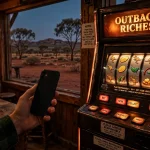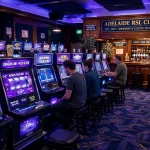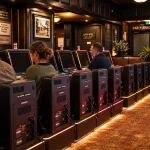
The phrase may describe a physical cabinet or a digital slot, but it does not prove an online version is available.

When people say “Dragon Link pokies machine”, they are usually combining a name with a familiar description of a gambling machine. The wording can bring to mind a physical cabinet, a digital game, or both. But the phrase by itself does not tell you which one someone means, and it does not establish that a particular physical machine has an online counterpart.
I used to treat a machine name as if it pointed to one definite thing. It doesn’t always. A name in a sentence can be a label, a way of describing a category, or simply the words someone remembers from somewhere else. Add “pokie machine”, “casino machine” or “slot machine” and you have a clearer idea of the kind of thing being discussed, but not proof of a specific game’s format or availability.
“Online” changes the setting implied by the phrase. In ordinary usage, an online pokie machine means a digital slot-style game accessed through a screen rather than a physical cabinet. The word “machine” is still used, even though the player is looking at software, not operating a cabinet in a venue. That is a language habit, not a technical description of what is running behind the screen.
When looking for Dragon Link online pokies in Australia, you should check each casino’s available licensing and payment information before choosing where to play. This list gives you a concise starting point for that research.
DragonSlots Casino
DragonSlots Casino is listed with a Curacao Gaming Authority licence held by Jumpman Gaming Ltd.
Playfina Casino
Playfina Casino is listed with a Curacao eGaming licence held by Hollycorn N.V., which dates to 2017. Its minimum deposit is A$20–30, depending on the offer.
7Bit Casino
7Bit Casino is listed as a Curacao-licensed casino operated by Dama N.V.
Roby Casino
Roby Casino is listed with a Curacao eGaming licence held by Roby Games Ltd.
SpinsUp
SpinsUp is listed with a Curacao Gaming Control Board OGL/2023/174/0082 licence held by Dama N.V.
Neospin
Neospin is listed with a Curacao Gaming Control Board OGL/2023/176/0095 licence held by Hollycorn N.V.
Ricky Casino
Ricky Casino lists crypto payouts under an hour and PayID payouts in 1–3 business days. The minimum deposit is A$20, or A$30 to qualify for the bonus.
Kingmaker
Kingmaker lists crypto payouts at about 90 minutes and fiat payouts in 1–5 days. Its minimum deposit is A$30.
SkyCrown
SkyCrown is listed with a Tobique Gaming Commission licence. It lists crypto payouts at about 10–15 minutes, fiat payouts in 1–5 days, and a A$30 minimum deposit.
House of Pokies
House of Pokies lists an international iGaming licence, but the source does not name the jurisdiction. PayID payouts are listed at 1–24 hours; the minimum deposit is A$30, or A$10 when using PayID.
The same distinction matters when a phrase includes “Australia”. It identifies the audience or place the person has in mind; it does not confirm that a particular game is offered there, or that an online version exists. A search for an Australian Dragon Link machine may reflect interest in the name and the machine format, but the wording alone cannot settle whether the intended reference is physical or digital.
I’ve made this kind of leap before: I saw a familiar title paired with “online” and assumed I was looking at the same thing I had heard about elsewhere, just on a screen. That assumption can quietly add details the words don’t support. The physical-machine idea and the online-game idea may sound connected, but a shared name is not enough to show how they relate.
A useful way to read the phrase is to separate its parts. “Dragon Link” is the name being mentioned. “Pokies machine” or “slot machine” describes the general kind of entertainment the speaker has in mind. “Online” points to a digital setting. Put together, the phrase expresses an interest in a digital machine-style game associated with that name; it does not, by itself, identify a verified product or tell you what it looks or plays like.
That distinction also keeps “machine” from doing too much work. In a venue, the word can mean a physical unit with a screen and controls. In an online context, people often use it loosely for the game shown on a screen. The term doesn’t prove that the digital version reproduces a physical cabinet, or that a cabinet with the same name exists. Those are separate claims.
The broader label “pokies” is common Australian wording for slot-style gambling games. It can appear in descriptions of both physical machines and digital play. So when someone refers to a Dragon Link pokie machine online, the safest reading is about the kind of game they have in mind, not a confirmed account of a specific machine. The wording is familiar. The underlying details still matter.
Payment terminology can create another category, but it should not be confused with a game’s identity. For instance, Bitcoin pokies refers to digital slot-style games that take Bitcoin as a payment method. That description is about the payment option attached to a digital game, not evidence that a named game accepts Bitcoin. A label about payment cannot fill in missing information about an individual title.
I find it helps to pause at the noun. Is the person talking about a cabinet, a game presented online, or simply using “machine” as a casual name for slot-style play? The phrase may not answer that. Reading it narrowly avoids turning an everyday expression into a claim about a particular physical object, software version, or service.
So “Dragon Link machine online” is best understood as a description of the subject someone is referring to: a machine-style game associated in their mind with the Dragon Link name, in a digital setting. It is not a technical specification. It doesn’t tell you whether the game has an online edition, what its features are, or where it can be accessed. Those details are separate from what the phrase itself means.
That’s the plain distinction. Name, format, and setting are not the same thing.
“Free” and “real-money” describe different ways of playing online pokies. They are not two labels for the same experience, and one should not be treated as a harmless preview of the other. The distinction is about whether money is being wagered, not about whether a game name sounds familiar or a page looks polished.
In free play, you play without staking your own money. In real-money play, you wager money, so a result can have a financial consequence. That difference changes what is at risk. Free play may let someone engage with a game without a cash stake; real-money play puts funds into the activity. I’d keep those ideas separate rather than assuming one mode automatically leads to, or accurately represents, the other.
A free-play label can sound reassuring. But “free” only speaks to the cost of that mode; it does not prove that a particular game or service is available to Australians, or that any other version is suitable to use. Likewise, seeing the name Dragon Link beside a free-play claim does not tell you that a real-money version exists through a lawful Australian service. A label is not proof.
The same caution applies in reverse. A real-money claim is not evidence that a free mode is offered alongside it. The two modes are choices people may encounter with online pokies, but their presence and conditions depend on the particular offering. Don’t fill in those details from a familiar title or a confident-sounding description.
There is also a difference between playing without a monetary stake and treating the experience as a way to make money. Free play does not turn into a source of cash simply because a player spends time on it. Real-money play, by contrast, involves money being wagered, with the possibility of financial loss. Neither label tells you what will happen in a session. Neither makes outcomes predictable.
That distinction matters when a page uses phrases such as “try it free” near wording about playing for cash. Those claims can sit close together in advertising, but they point to different risks. I used to let a friendly-looking free offer blur the line in my head. It doesn’t. Free play is not a guarantee that the same conditions apply elsewhere, and it is not a promise of future winnings.
For Australians, it is especially important not to read a free-play description as an invitation or assurance that a real-money service is lawful to use. Anyone considering real-money gambling must be at least eighteen, but age alone does not make an online casino service lawful to offer here. The legal position is a separate issue, and a website’s wording cannot settle it.
If you see a free-play option, read the phrase narrowly: it describes play without staking money, not a reliable preview of every other mode. If you see a real-money option, understand that money is at stake; a free label elsewhere does not remove that risk. I would not treat either phrase as proof of the other mode’s availability, terms or legal status.
This is affiliate material and may include sponsored links. That disclosure does not change the distinction between free play and real-money play, and it should not be read as a recommendation to use an online casino. I’m not pointing you to one. The useful takeaway is simple: no cash stake and a cash wager are different situations, even when the game name or presentation looks similar.
Keep the label in its lane. “Free” means no money is being staked in that mode; “real-money” means funds are involved. It’s an important difference, not a small detail.
A search for Dragon Link pokies with real-money play in Australia runs into a legal boundary before it reaches questions about the game. The key issue is not whether a website accepts Australian visitors or displays an offshore licence. Under the Interactive Gambling Act 2001, it is illegal for operators to provide real-money online casino games to people physically located in Australia. That category includes pokies, as well as online poker and table games.
The restriction concerns the service provider. It means a website operating from overseas does not become lawful to offer real-money pokies to Australians just because it can be opened from an Australian device or lists a foreign regulator. Nor does a game’s name, presentation or payment method change the legal classification of the service. If an online casino-style game is offered for real money to someone in Australia, it falls within the prohibited-service framework.
That can be easy to miss when a site looks polished. I have learned not to treat a familiar game name, a page written for Australians or a licence badge as proof that the underlying offer is authorised here. Those details can describe how a business presents itself; they do not override Australian law. A licence issued elsewhere is not an Australian gambling licence.
The offshore operators discussed in connection with these offers hold licences primarily from Curacao eGaming or the Anjouan Gaming Authority. Those are foreign licensing arrangements. They do not permit an operator to provide prohibited real-money casino services to people in Australia.
A licence can indicate that an operator claims oversight in the jurisdiction that issued it. It does not establish that the operator is permitted to serve Australians, or that Australian consumer protections apply to a dispute. That distinction matters when the search is specifically about playing Dragon Link for money: a foreign licence should not be read as local approval.
Australian consumer protection laws do not apply to the offshore operators discussed. If an argument arises over an account, a payment or a refused withdrawal, you should not assume that the ordinary protections available in a dispute with an Australian business will cover the situation. The practical and legal position can be very different when the company is based offshore and the service itself is prohibited for Australian customers.
That is the part promotional language tends to blur. “Licensed” sounds reassuring, but the missing question is licensed where, and for what market? A foreign regulator’s name is not a substitute for permission under Australian law. No shortcut there.
Legal Restriction
Under the Interactive Gambling Act 2001, it is illegal for operators to provide real-money online casino games to people physically located in Australia.
The Interactive Gambling Act places the prohibition on operators providing these services. The legal frame does not make an Australian player criminally liable simply for accessing an offshore casino without a local licence. That is not the same as saying the service is lawful, endorsed or protected. The distinction is important: the operator’s conduct is prohibited, while the player does not face a fine or criminal prosecution merely for playing.
Regulators can also restrict access to offshore gambling services. So a site being reachable at one moment does not establish that it is authorised or that access will remain available. Availability is not a legal test. A page can load and still concern a service that an operator is not allowed to provide to people in Australia.
I would keep those points separate rather than turning them into a vague warning. The law prohibits operators from offering real-money online casino games to Australians; offshore licensing does not remove that prohibition; and Australian consumer protection laws do not apply to the offshore operators discussed. Each point answers a different question.
This section is affiliate material and may include sponsored links. That disclosure does not alter the legal position, and it should not be mistaken for a recommendation to use any casino. I would not treat a link, a licence label or a claim that a site accepts Australian players as evidence of local authorisation.
For anyone looking up real-money Dragon Link pokies, the useful legal takeaway is narrow but clear: the name of the game does not create an exception. Australian law treats online slots and other casino-style games offered for money to people in Australia as prohibited interactive gambling services. The foreign licence may explain where an operator says it is regulated; it does not make the offer lawful here or bring it under Australian consumer protection.
The name Dragon Link is specific; the claims attached to it online often aren’t. A page can use that name in a heading, image caption or game list, but the label alone does not establish that the particular game is available to play online, that a digital version is official, or that the page describes the game accurately.
That distinction matters when you’re trying to work out what “Dragon Link online” means. A search result may look definite while giving you no dependable way to identify the game behind the name. Without substantiated details tying a specific digital game to it, claims about its appearance, rules, bonus features, return rate or compatibility are just claims. I wouldn’t treat a confident description as confirmation.
Nor does the presence of a name on a website prove that a game is offered to people in Australia. A listing might be old, copied from elsewhere, or refer to something other than the digital game you had in mind. A page can also use “online” to suggest availability without showing evidence that the named game can actually be accessed. The wording is not proof. That’s the bit I’d keep in view.
Australia’s legal position is relevant here, even though it does not verify anything about Dragon Link itself. The Interactive Gambling Act 2001 prohibits operators from providing real-money online casino games, including pokies, to people in Australia. A title appearing on a site should not be read as confirmation that it is lawful for an operator to offer real-money play to Australians.
I’ve made the mistake of letting a familiar name do too much work for me. I saw a title presented as if its identity and availability were settled, then realised the page had not established either. That does not prove the game is unavailable; it means the page’s wording cannot settle the question. Familiarity is not evidence.
For a particular online version to be verifiable, there would need to be reliable information identifying the game and supporting the claims made about it. A title, thumbnail, promotional description or repeated mention is not enough on its own. If the details cannot be tied to a clear, credible basis, it is safer to leave them unconfirmed than to fill in the gaps with guesses.
The same caution applies to claims that Dragon Link is offered in a particular format or works in a particular way. Nothing about the name itself establishes the software, rules, features or access conditions. Those details should not be inferred from other games or from general descriptions of pokies.
This page is affiliate material and may include sponsored links. That disclosure does not confirm a game’s identity or availability, and it does not change the Australian restriction on operators providing real-money online casino games to residents. A commercial link is not independent proof.
So the careful answer is limited: Dragon Link is a name people may encounter in connection with online pokies, but a name on a page cannot, by itself, verify a specific online game or its availability in Australia. I’d rather leave that uncertainty visible than turn a label into a promise.
A casino site can display an offshore licence and still have no authority to offer real-money pokies to people in Australia. The operators discussed in this context hold licences from Curacao eGaming or the Anjouan Gaming Authority; that does not make their services locally licensed or bring them under Australian consumer protection laws. A licence badge is not a safety net.
I’ve learned to separate a statement about an operator from proof of what happens when a payment or withdrawal goes wrong. Verification checks, for instance, can arrive at an awkward point. Depending on the operator, a second stage may be requested when you first withdraw or after cumulative deposits reach a stated threshold between AUD 2,000 and AUD 5,000. The timing and trigger are not uniform. A request for documents at that stage can hold up a payout while the operator reviews them.
Delays can also come from an approval queue, incomplete identity checks, or payment batches processed during business hours. That is different from a blockchain transfer waiting to confirm: the operator may have received a transaction but not yet approved the withdrawal. “Fast payout” leaves out the queue.
Deposits can fail to appear in an account if an address has been reused, the amount sent is short, or the operator has not detected the transfer yet. Keep the transaction record, but do not assume that a screenshot or a transfer receipt settles a dispute. If Bitcoin or Ethereum is sent to the wrong address, the transfer is irreversible and generally cannot be recovered. I would not send extra funds to “unlock” a stuck withdrawal; that can deepen the loss without resolving the original issue.
Financial Risk
If Bitcoin or Ethereum is sent to the wrong address, the transfer is irreversible and generally cannot be recovered.
The practical risk is not just whether a site shows a licence. It is that an offshore operator may set its own verification process and payment rules, while Australian consumer protection laws do not apply to it. I’m not presenting a route to play: real-money online casino services are prohibited from serving people in Australia, and this page does not offer them. Real-money gambling is for adults aged eighteen or over, but that age condition does not make an offshore service lawful here.
This material is affiliate content and may include sponsored links. That disclosure does not endorse a casino or change the limits described above. Keep the distinction clear. A badge is a claim; a payout is a separate matter.
A page can use familiar-sounding labels for Dragon Link-themed pokies without establishing that a particular game is available or explaining how it works. I’ve learned not to treat a confident heading as proof. A name on a page is only a claim until there is reliable information to support it.
That matters when descriptions mention jackpot versions, themed editions or a slot machine with a particular title. Those phrases can sound specific, but they do not confirm that the named game exists, that it is connected to Dragon Link, or that an online version is offered. Nor do they tell you what its rules or features are. I can’t responsibly fill in those gaps with guesses.
The same caution applies when several pages repeat similar wording. Repetition can make a claim look established, but it is not independent confirmation. Look for clear, attributable details rather than borrowed descriptions or promotional language. If a page does not explain where its claims come from, I would not use it to make a decision.
“Grand jackpot” is marketing language, not evidence of a jackpot amount, prize structure or chance of winning. Likewise, a title that suggests a particular theme does not prove that a corresponding pokies game exists. I would not infer game rules, availability or outcomes from a name alone.
There is another boundary worth keeping in view: Australian law prohibits operators from providing real-money online casino games, including pokies, to people located in Australia. This section is not a recommendation to find or use a service. A label appearing online does not change that legal position.
I also treat commercial pages with care. This content is affiliate material and may include sponsored links; that relationship can shape what a page chooses to highlight. It does not make a game claim accurate. When a description moves quickly from a name to claims about jackpots or features, I stop and ask what is actually substantiated.
The plain answer is that broad searches for Dragon Link-themed pokies do not, by themselves, establish which games are offered or how any of them work. No clever reading between the lines fixes that. Better to leave a claim unconfirmed than turn a suggestive name into a fact.
A bonus can make a win look straightforward until the terms are applied. I have learned not to treat a displayed balance as money I can withdraw: bonus conditions may affect whether play counts and whether a claimed win is paid. That is a terms dispute, not a reliable route to a payout.
One detail worth checking is the wagering contribution assigned to each game. The rules may count table games at 0% and pokies at 100%, while some high-RTP slots may be capped at 50%. Those differences can change how quickly eligible play satisfies a requirement. If the wording is vague, or the game category is unclear, you and the operator may read the same bonus terms differently.
“Bonus eligible” can sound simple; the fine print may say otherwise. A game’s contribution is not necessarily the same as its headline return, and a listed percentage does not guarantee a win or a withdrawal. Nor does it confirm that a particular Dragon Link game or bonus is offered. I would not assume a Dragon Link bonus exists based on a title, a promotion, or a claim about winners.
Maximum-bet conditions create another common point of conflict. If a player exceeds the stated limit while bonus play is active, the operator may void that play. A win can therefore be disputed even when the game result itself is not in question. Before accepting any bonus, the useful questions are plain ones: which games count, what contribution applies, and what bet limit governs bonus play? Keep the terms as they appeared, because a vague memory is little help when wording is contested.
No “tip” can make a bonus win dependable. Contribution rules and bet limits govern eligibility; they do not alter chance or establish that anyone will win. The phrase “slot winners” is not evidence that a specific game pays out as claimed.
This is affiliate material and may include sponsored links. That disclosure does not make real-money online casino play lawful to offer in Australia: the Interactive Gambling Act prohibits operators from providing those services to people located here. My point is narrower—bonus terms can create disputes, and attractive wording is no substitute for clear conditions. Short version: read the rules, not the promise.
An app listing can look like a tidy answer: a familiar name, a polished icon, maybe a claim that the game is ready to install. I’ve learned not to treat any of that as proof. A label such as “official” is just a claim until it can be tied to the people who actually make or operate the product.
That matters when you’re looking for a Dragon Link app on a phone. A casino app, a mobile website saved to your home screen and an app that contains a particular game are not the same thing. A search result can blur those distinctions. So can a page that uses the game’s name in its title without showing who is responsible for the software.
The same caution applies to claims about safety. An app’s appearance does not tell you what permissions it requests, who receives information entered into it, or whether the download has been altered. I’ve clicked through enough glossy pages to know that a confident design can hide a very ordinary lack of evidence. Looks convincing. That’s all.
Nor does a phone-sized version establish that a game runs as a standalone app. The words “mobile,” “app” and “available” get used loosely in promotional copy; they may describe different things. Without a clear, attributable explanation, the label alone cannot settle which one you are looking at.
And an app page does not establish a slot’s return to player. That figure concerns game rules and configuration, not whether a download is genuine or whether a particular version is offered through an app. I wouldn’t infer an RTP from a title, icon or store description.
In Australia, there is another boundary: locally licensed online casinos cannot offer real-money pokies to people here. A phone interface does not change that. I keep the checks narrow: who stands behind the app, what exactly it does, and whether the claims can be independently substantiated. If those answers are hazy, I don’t fill the gaps with wishful thinking.
A guide that explains how to get Bitcoin is describing a payment process, not a way to win. Bitcoin can be purchased with regular currency through a cryptocurrency exchange. In a casino payment flow, a player would send it from a wallet to an address supplied by the operator. Those steps explain how funds move; they say nothing about the result of a game.
I’ve learned to be wary when “how to win” appears beside payment instructions. Buying Bitcoin, setting up a wallet or transferring funds cannot make a result predictable. A walkthrough may explain buttons or account steps, but that is different from showing a reliable method for winning. Confident wording is not evidence. No magic trick.
There is also a more basic issue for anyone in Australia: operators cannot lawfully provide real-money online casino games to people here. A description of offshore payment steps should not be read as an invitation to use them. Australian consumer protection laws do not apply to the offshore operators discussed, and a Bitcoin transfer sent to the wrong address is generally irreversible and unrecoverable. Do not send more money to try to unlock a stuck withdrawal.
This page is affiliate material and may include sponsored links. I treat that as a reason to read promotional claims carefully, not as proof that a payment guide is a winning guide. When a headline promises a shortcut, check whether the material actually explains only account setup and transfers. If so, that is all it establishes.
“Happy and Prosperous” sounds like a complete game title, but a phrase that appears in a search does not establish that a Dragon Link game with that name exists. I’ve made that mistake myself: a confident-looking label can feel like a clue, then turn out to be only wording repeated across pages.
The distinction matters. A named game should be identifiable through reliable details, not just a title attached to “Dragon Link” or “slot machine”. Without substantiated information tying those words to a specific game, I can’t responsibly describe its rules, symbols, bonus rounds, provider or availability. Filling those gaps with familiar slot features would be guesswork dressed up as a review.
That does not prove the title is fictional, either. It simply means the name alone cannot settle the question. Similar wording, punctuation changes or a polished page can make a claim look more established than it is. I would treat any detailed description cautiously unless it can be traced to dependable, game-specific documentation.
There is another point I won’t dress up: Australian law prohibits operators from providing real-money online casino games, including pokies, to people in Australia. A page presenting a title as playable does not change that restriction or establish that the game is legitimate.
So if you have come across “Happy and Prosperous” linked to Dragon Link, keep the claim separate from what is actually demonstrated. A title is not proof of a game. And a description is not proof either.