A practical look at what spin randomness, venue details and reporting can—and cannot—establish.
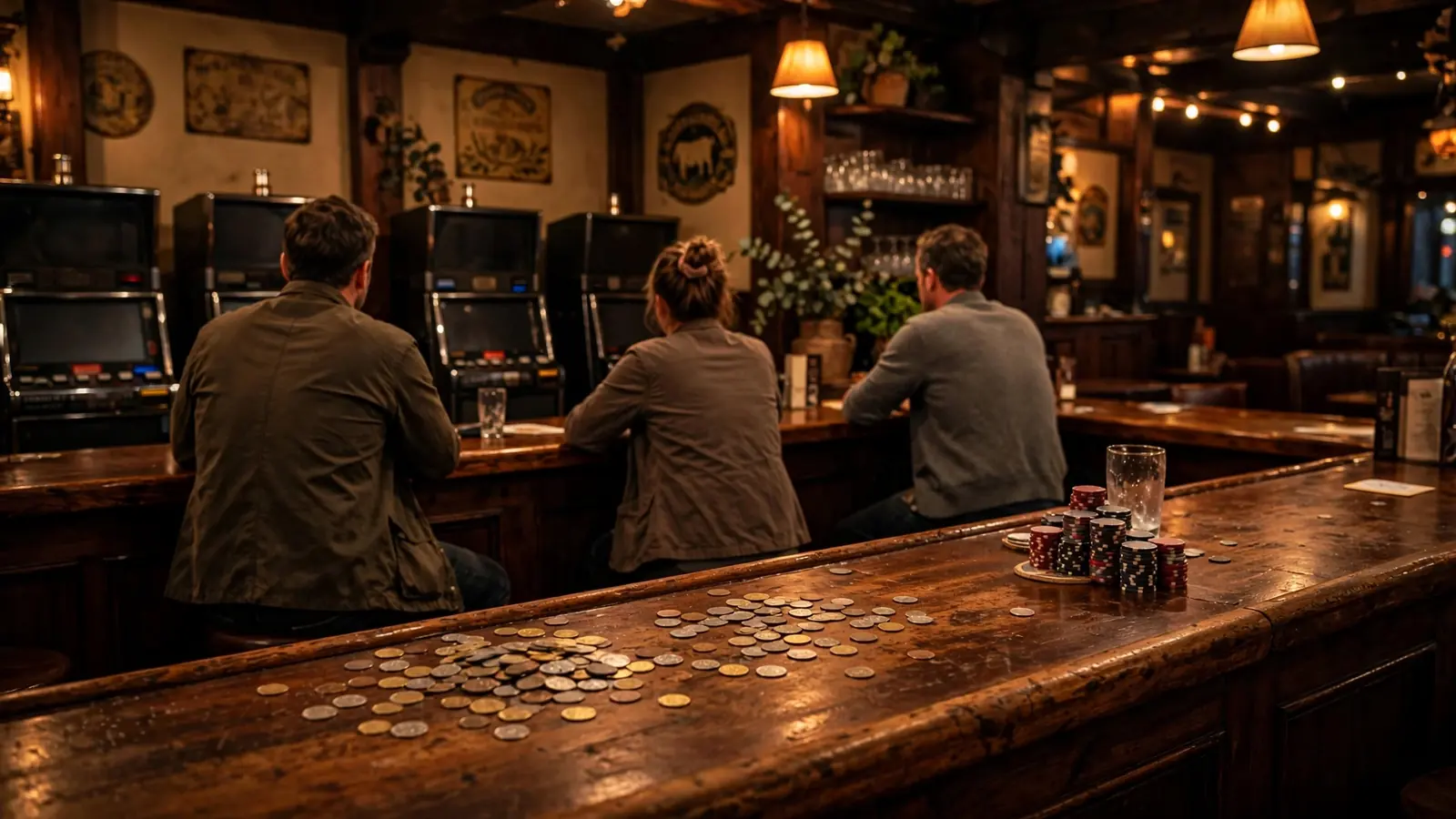
“Best” sounds like a clear verdict. In practice, it can mean a game you enjoy, one with a particular feature, or one someone claims pays well. Those are different things. I’ve learned not to treat a confident label as proof that a pokie is more likely to return money to me.
The useful starting point is narrower: each spin is an independent random event determined by a Random Number Generator. A previous result doesn’t make the next spin due to win, and a run of losses doesn’t tell you that a payout is about to arrive. The reels may make a sequence feel like a story, but the spin itself doesn’t remember what happened before.
That matters when you’re trying to compare pokies in South Australia. A busy room, a machine that appears popular, or a screen showing someone else’s win can make a game feel like a sound choice. None of those things, by themselves, establish that the machine will pay you better. Nor does the name of a venue tell you what result you’ll get from an individual spin.
If you’re looking for pokies options to consider in South Australia in 2026, this list gives you a quick reference to the operators and the details available about them. Check the terms that matter to you before choosing where to play.
DragonSlots Casino
DragonSlots Casino is listed with a Curacao Gaming Authority licence, with Jumpman Gaming Ltd named as the operator.
Playfina Casino
Playfina Casino is listed as licensed by Curacao eGaming, with Hollycorn N.V. named as the operator since 2017. Its minimum deposit is A$20–30, depending on the offer.
7Bit Casino
7Bit Casino is listed as a Curacao-licensed operator run by Dama N.V.
Roby Casino
Roby Casino is listed with a Curacao eGaming licence, with Roby Games Ltd named as the operator.
SpinsUp
SpinsUp is listed with a Curacao Gaming Control Board OGL/2023/174/0082 licence, with Dama N.V. named as the operator.
Neospin
Neospin is listed with a Curacao Gaming Control Board OGL/2023/176/0095 licence, with Hollycorn N.V. named as the operator.
Ricky Casino
Ricky Casino lists crypto payouts in under an hour and PayID payouts in 1–3 business days. The minimum deposit is A$20, or A$30 to qualify for the bonus.
Kingmaker
Kingmaker lists crypto payouts at around 90 minutes and fiat payouts in 1–5 days. Its minimum deposit is A$30.
SkyCrown
SkyCrown is listed with a Tobique Gaming Commission licence. It lists crypto payouts at around 10–15 minutes, fiat payouts in 1–5 days, and a minimum deposit of A$30.
House of Pokies
House of Pokies lists an international iGaming licence, though the jurisdiction is not named in the available information. PayID payouts are listed at 1–24 hours, with a minimum deposit of A$30 or A$10 when using PayID.
So I wouldn’t turn “best pokies in South Australia” into a promise of the best-paying machine or a guaranteed route to a win. I can talk about how a spin works and what venue responsibilities have been reported. I can’t honestly translate those points into a ranked list of machines by likely payout. That isn’t a matter of being fussy with wording; it’s the difference between describing a game and pretending to predict it.
I’ve made the familiar mistake of letting presentation do the convincing. A bright screen, a feature that looks close to triggering, or the feeling that a machine has “warmed up” can all pull you into reading meaning into chance. I know how persuasive that can feel while you’re sitting there. But a near miss isn’t evidence that the next spin will be kinder, and a machine’s recent history doesn’t create a personal debt it has to repay.
The same goes for a venue-level reputation. People can trade stories about a favourite club or a memorable win, but a story about one visit can’t establish how a particular machine will perform for the next person. It’s fine to choose a venue for its location or atmosphere; that’s a preference. It’s different from claiming that its pokies are better at paying out.
There is also a venue-side point worth keeping in view. A report by regionriverina.com.au says that, from 1 July, venues with more than 20 gaming machines must have a dedicated responsible gambling officer (RGO) on duty while those machines are operating. That is a staff responsibility, not a signal about the generosity of the machines. A venue taking its obligations seriously cannot make an individual spin predictable.
This distinction is easy to lose when the question is framed around the “best paying” pokies. A room can have staff and procedures; a machine can still produce an unpredictable result. And an unpredictable result is not the same as a promise that outcomes will balance out during your visit. If I’m deciding whether to play, I want to keep those ideas separate rather than letting a venue’s appearance or a machine’s theme stand in for evidence.
For a practical decision, I’d treat the machine as entertainment with an uncertain outcome, not as a way to make money. Decide what you can afford to lose before you start, and stop when that amount is gone. That’s not a trick for improving your odds; it’s a boundary that doesn’t depend on the machine doing anything for you.
There’s no magic label here. A “hot” machine is a story, not a forecast. South Australian pokies can be discussed in terms of randomness and the responsibilities attached to operating venues, but those points don’t identify a machine that will pay best on your next visit. Keep the claim modest, and the decision clearer.
Opening access is more than a door being unlocked. If you’re deciding whether to visit a South Australian venue, it’s worth separating its advertised hours from the conditions that apply once its pokies are operating. One is a practical detail for your trip; the other is a staff responsibility reported for larger gaming venues.
From 1 July, venues with more than 20 gaming machines must have a dedicated responsible gambling officer (RGO) on duty while those machines are operating.
A report by regionriverina.com.au says that, from 1 July, a venue with more than 20 gaming machines is required to have a dedicated responsible gambling officer, or RGO, on duty while those machines are running. The important part is the link between the officer’s presence and machine operation. It is not a statement that every venue must keep its doors open, nor does it tell you when a particular venue starts or stops operating its pokies.
That distinction matters when you’re looking for a place open now, or hoping to find one that opens early or stays open late. A staffing requirement does not work as a timetable. It won’t confirm that a venue is trading today, that its gaming area is available at the time you plan to arrive, or that its listed hours are current. For that, you need information from the venue itself.
I’ve made the mistake of treating a confident-looking listing as if it settled the whole question. It may tell you when a business expects to be open, but it doesn’t necessarily establish the current status of the gaming room. If timing matters, contact the venue and ask specifically about access to its pokies, rather than assuming that general opening hours answer it.
The RGO detail gives you a narrower, useful point to keep in mind. At venues above the stated machine threshold, the reported requirement is for a dedicated officer to be present during machine operation. It does not mean that an officer is there to advise you which game to choose, predict a result, or make a session profitable. It describes a staff role connected to responsible gambling, not a service that changes how a pokie behaves.
That’s also why I wouldn’t read the rule as a recommendation to visit a particular venue. A staffing condition is not a quality score, a payout measure or a sign that one room is better than another. It tells you something about what a qualifying venue is expected to have in place while its machines are running. It cannot tell you what your experience will be or what any spin will return.
If you are checking whether South Australia pokies are open at the moment, keep the two questions separate: is the venue open, and are the pokies operating? The reported RGO requirement speaks to the latter condition for venues with more than 20 machines. It does not supply live opening information for individual businesses, so don’t use it as a substitute for a call or a current notice from the venue.
The same applies if you’re planning around an early start. Seeing that a venue is open does not, by itself, confirm that its gaming area is available from the start of its general trading hours. And if you’re heading out later, the staffing rule doesn’t establish that any specific venue keeps its machines operating late. Check directly before making the trip.
I’d also keep this separate from questions about payout percentage. Having an RGO on duty is about a venue’s staffing responsibility while machines operate. It says nothing about the return setting of a particular pokie, and it cannot be used to compare venues or games. Those are different questions, and blending them can make a simple staffing requirement sound like a promise about gambling outcomes. It isn’t.
In plain terms, the reported rule gives you a condition attached to machine operation at larger venues, not an answer to every “open now” question. Use it as context, then verify access with the venue you intend to visit. A quick check beats turning up on an assumption.
“Near me” sounds precise, but it only becomes useful once you know which venue the result refers to and where it is. A result that mentions South Australia, an airport or a central area may still cover a broad region rather than a place you can locate on a map. I’ve learned not to treat a familiar-sounding label as a street address.
For a venue you are considering, check its full address and place that address against your intended starting point. If you are looking around an airport, use the particular airport as the reference point; “near the airport” does not tell you how far away the venue is or how you would get there. The same goes for the CBD. A listing that uses “central” may mean a general part of a city, not a venue within the central business district.
That distinction matters when the wording is broad. “Pokies near South Australia” does not identify a single destination: South Australia is a state, not a precise point on a map. “Near South Australia airport” is also incomplete unless you know which airport the listing means. And a result that includes “Vic” may refer to Victoria rather than a South Australian location. Check the location itself before assuming the result matches your plans.
I would also be cautious with place names that appear beside the state in a listing. A name such as Parkes is not enough on its own to establish that a venue is in South Australia; the full address is what lets you distinguish one place from another. Search wording can combine nearby regions, broad areas and venue terms in ways that sound more local than they are.
There is a simple way to avoid making a trip on the strength of a label. Open the venue’s own location details, confirm the address, and compare it with your actual starting point. If the location page gives only a suburb, a region or a general description, you still may not have enough to judge proximity. Check that the listing refers to the physical venue you mean, rather than another business or a similarly named place.
I’ve made the mistake of reading a short location label as if it settled the question. It doesn’t. A map can help you understand where an address sits, but the address has to be clear first. “Central” and “nearby” are descriptions, not directions.
Confirming Venue Location
Open location details
Find the venue's official location page to get the full street address.
Use a reference point
Compare the address against your actual starting point, such as a specific airport or the CBD.
Verify the map
Place the clear address on a map to determine the actual distance and travel route.
This is a practical distinction, not a verdict about which venue is better. A place may be convenient for one journey and awkward for another, depending on where you are coming from and how you plan to travel. The useful question is not whether a result uses the words “airport,” “CBD” or “near me”; it is whether its address corresponds to the destination you need.
If you are comparing venues around South Australia, keep the location check separate from assumptions about the venue itself. A search result’s wording cannot establish how close it is, what facilities it has, or whether it suits your plans. Confirm the place first. Then decide whether travelling there makes sense for you.
A search for online pokies in South Australia can make the options look like ordinary local services. The legal position is not that simple. Australia has no licensed online casino, and the Interactive Gambling Act 2001 prohibits companies from offering real-money online pokies to people in Australia without a domestic licence. No domestic licences for online casinos have been issued.
That distinction matters: the law is aimed at the operator providing the service, not at turning an offshore casino into an Australian-licensed one because it accepts Australian customers. ACMA enforces the Act and blocks access to illegal offshore gambling sites; internet service providers must comply with its blocklist. A site appearing in a result, or loading on your device, is not proof that it is authorised here.
I used to see a polished page and assume the boring checks had probably been handled. That was a bad shortcut. A “local-friendly” label is marketing, not a licence. Nor does a deposit option change the legal status of the service: how money moves and whether an operator is authorised are separate questions.
That applies whether the offer is described as real-money play, a no-deposit bonus, high limits or a maximum bet. Those phrases can make an offer sound tailored to South Australian players, but they do not establish that a company can lawfully provide online pokies to people in Australia. A promotion is not a legal safeguard, and a payment method is not one either.
I’m not comparing deposit methods here or pointing you towards an online casino. The important distinction is simpler: payment details tell you how a transaction may be handled; they do not tell you that the underlying gambling service has an Australian licence. There is no Australian-licensed online casino to verify against. Treat claims that suggest otherwise with care.
There is also a practical risk that can get lost behind talk of bonuses or “best paying” games. If an offshore casino refuses to pay winnings, Australian players have no legal recourse in Australia. That leaves you relying on an overseas operator’s own processes, rather than domestic casino licensing and protections. A promise on a website does not remove that exposure.
Legal Risk
Real-money online casino services are prohibited for operators serving people in Australia, and no Australian-licensed online casino exists.
So if you want pokies near South Australia, or are weighing up online play instead of a physical venue, keep those as different questions. Location wording and a South Australian reference do not create a local online licence. And claims that a game pays best are not made reliable by an enticing deposit offer. Before focusing on what an online offer appears to provide, understand that real-money online casino services are prohibited for operators serving people in Australia, and that no Australian-licensed online casino exists.
The line is legal first. The sales pitch comes after.
When you’re comparing pokies venues in South Australia, it’s easy to focus on what you can see: the machines, the room and the service. Less visible is how a venue responds when someone appears to be struggling. That matters, but it doesn’t turn a venue into a safe bet or tell you which place is “best”.
A report by regionriverina.com.au says venues will be required to keep a gambling incident register. The register is intended to record occurrences, including situations where a patron’s behaviour indicates they may be at risk of, or affected by, gambling harm. That’s a record-keeping measure: it puts the focus on incidents and how they are documented, rather than leaving every concern as an informal conversation.
There’s a useful distinction here. A register can help a venue keep track of what staff observe and when it happens. It is not a public scorecard, a promise that every sign of harm will be noticed, or proof that a particular venue handles every situation well. I wouldn’t read “has a process” as “nothing can go wrong”. Those aren’t the same thing.
The report also shouldn’t be mistaken for a venue-by-venue guide to South Australia. It doesn’t tell you which local clubs keep a register, what any particular entry contains, or how a specific venue responds to a patron. So it can’t support a ranking of South Australian pokies venues, either. A search for the best pokies venue in South Australia may lead you to lists and confident claims; incident recording alone cannot establish that one venue is better than another.
For a player, the practical value is narrower but still real: it recognises that gambling-related harm can show up in behaviour, and that occurrences of concern should be recorded. If you or someone with you is having a rough time, you can speak to venue staff rather than treating the machines as the only thing that matters. A register is part of oversight, not a substitute for getting help.
I’ve learned not to treat official-sounding language as a guarantee. “Responsible” can sound reassuring; what it really tells you here is that a process is being described, not that an outcome is assured. Keep that difference in mind when weighing claims about clubs, including claims about pokies venues in the CBD. A record-keeping requirement doesn’t tell you which machines are there, how they perform, or whether a venue suits you.
The grounded takeaway is modest: incident records are meant to capture occurrences, including behaviour that may point to gambling harm. They may support venue oversight. They do not show you a venue’s results, establish a local ranking, or predict what will happen during your visit. Process, not a promise.
A venue’s gaming area being open late is not the same as being available all night. If you need somewhere to play now, treat “open” as something to confirm with the venue directly, rather than reading a broad label as a promise that the pokies are operating at this moment. Opening times can be easy to misread when a listing refers to the bar, dining area or whole venue rather than the gaming floor.
I’ve learned not to build a trip around a vague opening-hours snippet. Check the venue’s own current information, and, if the distinction matters, contact staff and ask specifically whether the pokies are operating. A place can be open without answering that question. Small detail. Big difference.
There is also a staffing requirement worth keeping in view. A report by regionriverina.com.au says that, from 1 July, venues operating more than 20 gaming machines are required to have a dedicated responsible gambling officer (RGO) on duty while those machines are running. That requirement concerns staff presence during machine operation; it does not establish that a venue operates around the clock or tell you whether its pokies are running when you plan to arrive.
That is why “24-hour” should be checked as a specific claim, not treated as a general feature of South Australian venues. Confirm the relevant hours for the gaming area, not just the venue’s overall opening time. If the venue does not clearly distinguish between them, ask before setting out. I would rather spend a minute checking than discover the answer at the door.
For the same reason, a result labelled “open now” is only useful if it reflects the part of the venue you intend to use and is current. The practical question is not simply whether the building is open, but whether its pokies are operating at the time you want to visit. Don’t assume that late access means uninterrupted access through the night.
If you’re planning around a particular time, make that time part of your check. Ask whether the gaming area will be operating then, and whether the answer applies to the day you intend to visit. The RGO requirement applies while machines are operating at venues above the stated machine threshold; it is not a timetable. Hours need their own confirmation.
No guesswork.
A Crown result can look like an answer to a South Australian pokies search while referring to a different place entirely. The name alone does not tell you where a venue is, whether it has a gaming room, or what machines are available. I’ve learned not to treat a familiar casino name in a heading as proof that it matches the location I had in mind.
That matters if you are comparing Crown with local venues or trying to find the “best pokies room” in South Australia. A polished page can describe a venue elsewhere, yet still appear beside local results. Before relying on any claim, check that it names a South Australian address and that the details actually relate to that venue. If it does not, the page may be irrelevant to your plans.
Attention A familiar casino name in a search result does not prove the venue is located in South Australia or matches your intended location.
No shortcut. Check the place.
The same caution applies to claims about particular pokies at Crown. A game’s name, a room description or a promotional phrase does not show how a specific machine performs. Nor does a broad claim about a casino tell you what is installed at a South Australian venue. I would want a clear connection between the statement and the exact location before treating it as useful.
Payout language needs the same scepticism. “Maximum cash payout” sounds precise, but it can refer to different things: a game’s stated prize feature, a venue’s cash-handling arrangements, or a limit described by someone else. Those are not interchangeable. Without a clear explanation of what is being capped and where the rule applies, the phrase does not tell you what you could collect from a particular pokie.
I used to read confident labels as if they were the detail. They aren’t. If a page says Crown and South Australia in the same breath, look for the actual venue and the basis for each specific claim. If those are not clear, don’t fill in the blanks yourself or assume the result describes a local casino.
This is not a reason to treat every Crown-related result as wrong. It is a reason to separate the brand name from the location and the claim from the evidence. A venue can only be compared fairly when you know which place is being described and what the information refers to. A search result is a starting point, not a venue check.
A South Australian club in the CBD might sound like an easy place to narrow down a pokies outing. But “CBD club” is not a useful measure of what you’ll find once you arrive. It tells you roughly where to look, not which club has pokies, what machines are there or how the venue operates.
I wouldn’t treat a club’s name, location or reputation as evidence that its pokies are “best”. A machine’s return setting can differ between casinos, and each spin is a separate random event. Neither point tells you what a particular club’s machines are set to or predicts what will happen in a session. There’s no honest shortcut from a CBD address to a claim about better returns.
That distinction matters because vague descriptions can sound more definite than they are. “Popular”, “hot” and “due” may dress up a guess as useful advice. They don’t establish a machine’s settings or make the next spin more likely to pay. No magic map.
If you’re considering a particular club, confirm the details with that venue before making the trip. Check whether it has pokies and ask directly about the practical arrangements that matter to you. Don’t assume a listing, an old comment or a photograph tells you what is available now. I’ve learned the hard way that a confident description can leave out the one detail you actually needed.
Available tools include self-exclusion options, as well as deposit, loss, and session-time limits. These are recognized tools to help players take a break.
Self-exclusion is a separate question from which club has pokies. Self-exclusion options, alongside deposit, loss and session-time limits, are recognised responsible-gambling tools. If you want to take a break, consider what kind of limit or exclusion support would help you, then ask the venue or a relevant support service how it works in your circumstances. Don’t assume that one club’s process automatically covers every other venue.
The useful answer to a search for CBD clubs is not a made-up shortlist. It’s a clear distinction between what a location can tell you and what it cannot. A club’s postcode does not show its machine settings, predict a result or tell you whether its arrangements suit your needs. Confirm the venue details directly, and keep claims about “best” pokies in proportion to what they can actually prove.
“Cashless” can mean different things, so I’d separate the payment rail from the way a venue handles play. PayID is not itself a pokie or a cashless gaming setup. It is an alias layer on Australia’s New Payments Platform (NPP): a transfer can be addressed using an email address, mobile number or ABN instead of the recipient’s bank details.
That distinction matters when you see PayID mentioned beside South Australian pokies. The term describes how a transfer is addressed; by itself, it doesn’t tell you how a particular venue accepts money or whether its machines use a cashless system. Those are separate questions. Easy to blur together.
The Newcastle wording needs the same care. “Newcastle” alongside “South Australia” does not, on its own, pin down a venue or tell you what kind of pokie arrangement is available there. I wouldn’t treat a place name and a payment term appearing together as evidence of a local cashless option. First establish which venue and location are meant; then check the venue’s own current information for its payment arrangements.
I’ve learned not to let a familiar payment name do more work than it can. PayID tells you the alias used for a transfer through the NPP. It doesn’t tell you whether a venue accepts it, whether play is cashless, or whether the machines are any different. Keep those details separate, and the wording is much less likely to leave you with the wrong impression.
When I hear a pokie described as “high return”, I want to know what that figure actually tells me. A return-to-player percentage, or RTP, is a game setting—not a forecast for your next spin, or a promise that a particular session will end ahead.
A specialist review has reported that some game providers allow casinos to choose between different RTP settings for the same pokie. So a game with the same name could have a different configured return at different casinos. That’s worth keeping in mind when comparing options, but it doesn’t tell you which South Australian venue has which setting. Nor does it establish that one game is the best choice.
The other part is randomness. Each spin is an independent event determined by a Random Number Generator. The previous result doesn’t make a particular outcome due, and a run of losses doesn’t mean a win is now more likely. I’ve made that mistake myself: treating a streak as a clue, then feeding it more money. It wasn’t a clue.
A configured RTP and an individual result answer different questions. RTP describes the setting attached to a game; the RNG determines the outcome of each spin. Neither can tell you what you will personally get back in a short session. No certainty there.
That’s why a “best pokies” claim needs more than a familiar title or a return figure without context. You’d need to know the setting in use, and even then it would not predict your next result. For pokies in South Australia, the sensible distinction is plain: settings may differ between casinos, while every spin remains random. Don’t read a percentage as a payout promise.
Yes, Australian players can legally play on offshore sites that accept them, but companies cannot legally offer real-money online pokies to Australians without a domestic licence, and none have been issued. If an offshore casino refuses to pay, you have no legal recourse in Australia.
It is the amount you must bet before bonus winnings can be withdrawn, expressed as a multiplier. For example, a $500 bonus with a 40x requirement means $20,000 in bets; if the requirement applies to a $500 deposit plus a $500 bonus at 35x, it means $35,000 in bets.
Some game providers let casinos choose from multiple RTP settings for a game, so the same pokie may have different return percentages at different casinos.