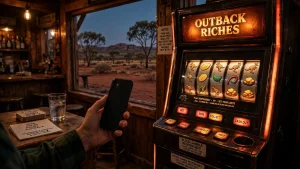
The guide separates game labels and promotional claims from the legal status of real-money casino services in Australia.

I used to treat the word “casino” as if it settled the important questions. It doesn’t. A site can look polished, offer games with familiar names and make its terms sound official; none of that tells you whether the service is lawful for people in Australia. Before looking at how keno is presented, it helps to get the basic legal position straight.
The Interactive Gambling Act 2001 sets the central rule for online casino games. Companies cannot offer real-money online pokies to Australian residents without a domestic licence. No such licences have been issued, and there is no Australian-licensed online casino. That is the starting point for understanding pages that describe an online casino keno game as if it were simply another entertainment option.
The position is not changed by the way a site describes itself. “Keno,” “casino,” or “entertainment” in a heading is not a licence, and a professional-looking website does not become an Australian-licensed casino because it accepts Australian visitors or displays information in Australian dollars. The law concerns the service being offered, not just the label chosen for a page.
Choosing an online casino for keno calls for checking the information that matters to you, including licensing details and payment terms where available. Use these verdicts as a starting point, and verify the relevant details before you play.
DragonSlots Casino
DragonSlots Casino is listed with a Curacao Gaming Authority licence under Jumpman Gaming Ltd. The available information does not specify keno or payment details.
Playfina Casino
Playfina Casino is listed as operating under a Curacao eGaming licence held by Hollycorn N.V. since 2017. Its minimum deposit is A$20–30, depending on the offer.
7Bit Casino
7Bit Casino is listed as operating under a Curacao licence, with Dama N.V. as operator. No keno or payment details are provided here.
Roby Casino
Roby Casino is listed with a Curacao eGaming licence held by Roby Games Ltd. The available information does not describe its keno or payment options.
SpinsUp
SpinsUp is listed with a Curacao Gaming Control Board OGL, reference OGL/2023/174/0082, and is operated by Dama N.V. No keno or payment details are provided.
Neospin
Neospin is listed with a Curacao Gaming Control Board OGL, reference OGL/2023/176/0095, and is operated by Hollycorn N.V. The available details do not specify keno or payment terms.
Ricky Casino
Ricky Casino lists crypto payouts under an hour and PayID payouts in 1–3 business days. The minimum deposit is A$20, or A$30 to qualify for the bonus.
Kingmaker
Kingmaker lists crypto payouts at about 90 minutes and fiat payouts in 1–5 days. Its minimum deposit is A$30.
SkyCrown
SkyCrown is listed with a Tobique Gaming Commission licence. Its stated payout times are about 10–15 minutes for crypto and 1–5 days for fiat, with a A$30 minimum deposit.
House of Pokies
House of Pokies lists an international iGaming licence, but the jurisdiction is not named in the available information. PayID payouts are listed at 1–24 hours; the minimum deposit is A$30, or A$10 for PayID.
That distinction matters because people often arrive at the subject through a narrow game search. They may be thinking about a particular format, not about gambling law. I get that; I have focused on the game before and left the bigger question until later. But a real-money game offered through an online casino sits within a legal framework even when the page makes the game itself feel like the whole story.
The regulator responsible for enforcing the Interactive Gambling Act is the Australian Communications and Media Authority, or ACMA. Its role is part of the national framework around prohibited online gambling services. It is not a stamp that a reader can infer from a site’s design, payment options, game catalogue or claims about its software. Those details may tell you what the operator says it provides; they do not establish that an Australian domestic casino licence exists.
So when you see a page describing an online keno casino, separate two things in your mind: what the page claims to offer, and the legal status of real-money online casino services in Australia. The first is a description from the site. The second is governed by the Act and the absence of domestic online casino licences. Mixing the two is an easy mistake, especially when every page is written to make its own version of the story sound routine.
This is not a technicality that only matters to lawyers. Licensing is the basic question behind the words “Australian online casino.” If there is no Australian-licensed online casino, a site cannot accurately become one just by using local language, mentioning local payment methods or appearing in an Australian-facing search result. None of those signals substitutes for the domestic authorisation that does not exist.
That does not mean every page using the word keno is necessarily describing the same product or arrangement. It means the game name alone cannot answer the legal question. The useful first step is to identify whether the offer is real-money online casino gambling, rather than letting a familiar game title do all the thinking. The presentation can wait. The legal framework comes first.
I know the temptation to skip that part. A page can make the whole thing feel ordinary in a few seconds, and “best” language can make it sound as though the only task is comparing options. But in Australia, there is no domestic online casino licence to compare against. That is the market context, not a recommendation about where to play.
The cleanest way to read any claim is to keep the terms separate. A site may call a product an online casino, and it may call a game keno; those descriptions do not change the Interactive Gambling Act or create an Australian licence. ACMA enforces that law. Once you understand that baseline, the game’s labels and presentation can be assessed without mistaking them for legal approval.
No shortcut here.
Attention: There is no Australian-licensed online casino. A site's use of local language or payment methods does not substitute for a domestic authorisation that does not exist.
The distinction that matters when money is involved is who the law is aimed at. Under Australia’s rules, the offence is on the operator’s side: a company must not provide prohibited real-money online casino gambling to people in Australia. The law does not make an individual player liable simply for taking part. Australians can legally play on offshore sites that accept them.
That can sound like a clean answer to whether you can play keno for money. It isn’t a promise that the arrangement is safe, approved, or backed by an Australian regulator. The operator’s conduct and the player’s position are separate questions. I find it helps to keep them separate, because site wording can make the whole thing sound more settled than it is.
The practical difference becomes sharp if a withdrawal goes wrong. If an offshore casino refuses to pay a win, an Australian player has no legal recourse in Australia to make it honour the payment. A balance shown on a screen is not the same thing as money in your bank account, and a support agent’s assurance does not change where you could take a dispute.
That is the part I would weigh before putting real money into online keno. You might be able to register and play; that does not mean you have a local body that can step in if the operator disputes your account, delays a payout, or simply refuses to release winnings. The legal position for the player is not the same as a safety net for the player.
It is easy to focus on the game itself: a real-money keno round, a casino-style interface, perhaps a crypto option at checkout. Those details tell you how the site presents play or takes funds. They do not create Australian legal protection. Paying with cryptocurrency does not change the basic problem: if the site is offshore and will not pay, you still have no Australian legal route to compel it.
I used to treat “available to Australians” as if it meant “available with proper backup”. That was a bad shortcut. A site can accept a player without giving that player an Australian remedy. If you decide to play, treat any amount you deposit as money you may not be able to recover, and do not count a displayed win as yours until it has actually reached you.
This is not a warning that the individual player is breaking the law by playing on an offshore service that accepts them. It is a warning about the imbalance: the legal target is the operator, while the player can still be left carrying the financial loss. Those two points can both be true at once.
Free play is a different proposition because it does not involve risking a deposit, but it should not blur the distinction when you move to cash play. A free version does not establish that a real-money game has the same conditions, and a real-money offer does not improve your position if a payout is withheld. Keep the decision tied to what is actually at stake: your money, the operator’s willingness to pay, and the absence of an Australian remedy if it does not.
No Legal Recourse
If an offshore casino refuses to pay a win, an Australian player has no legal recourse in Australia to compel the operator to honour the payment.
So before you play casino keno online for money, be clear about the limit of the protection you have. You are not personally targeted by the operator-focused prohibition just because you play, but you also cannot rely on Australian law to recover an offshore casino win that is refused. That’s the hard edge.
Keno and pokies can sit close together in casino language, but they are not interchangeable names for the same thing. Keno refers to a game category; “pokies” is the Australian term for slot-style machine games. A site may group both under casino games, or use a label such as “keno pokies” to describe a machine-style version of keno. That wording tells you how the game is being presented, not what legal status the site has.
I used to treat a neat category label as if it settled more than it did. It doesn’t. “Online casino with keno” might simply mean that a casino-style catalogue includes keno alongside other games. “Keno slots” or “keno slot games” points more specifically towards keno-themed machine games, where the theme or terminology draws on keno. The name alone does not tell you whether you are looking at a traditional keno format or a pokie built around keno imagery.
That distinction matters when you’re trying to understand what a page actually offers. A site can use “live keno” to suggest a hosted or live-presented game, while another may use the same phrase loosely in a category heading. The label is not a full description. You need the rules and game information to see what is being described; a heading cannot establish the format by itself.
The same goes for terms such as “top keno casinos” or “best keno casino sites”. Those are descriptions people may use when comparing casino-style websites that mention keno. They do not establish that a site is suitable for Australian players, or that a particular game is available, licensed or independently verified. “Best” is a claim, not a feature of the game. I’ve learned not to let a confident label do the work of evidence.
Payment wording can muddy things further. A phrase like “Bitcoin casino with keno” combines a payment reference with a game category. It does not make the keno game more trustworthy, nor does it prove anything about the casino’s status. PayID is also a payment term, not a gaming certification: seeing it mentioned tells you nothing by itself about licensing, fairness or the return setting of a pokie.
There’s another wrinkle when a keno title is presented as a pokie. A specialist review reports that some providers let casinos choose among different return-to-player settings for a given pokie. In practical terms, the same named game may not carry the same stated return percentage everywhere. So matching titles and matching artwork are not enough to establish that two versions share the same setting. The relevant details would need to be disclosed for the particular version, rather than inferred from its name.
This is where loose terminology can lead you astray. A search result might call something keno, a slot, a machine game or a live game, while the actual description uses a narrower category. “Keno pokies” could mean a keno-themed pokie; it does not prove that every keno game is a pokie. And a casino advertising that it has keno does not tell you whether that means a live presentation, a digital draw-style game or a machine-style title.
I’d read the label as a starting point, then separate three things: the game’s name, the format it uses, and the claims made about the site hosting it. Keep those apart and the wording becomes less persuasive by itself. Labels are not proof.
A keno game can look busy, polished and oddly persuasive. Numbers appear, lights flash, and a result is presented with enough ceremony that it can feel as though the game is showing you a pattern. I have caught myself reading meaning into that kind of presentation. It is easy to do. But the display is not evidence that one result has changed the odds of the next one.
Where a keno-style game uses the same kind of random number generator as a pokie, each spin is an independent random event. That means the previous result does not determine the following result. A run of wins, a run of losses, or a result that looks unusually close to a hit does not tell you what the next spin will produce. The sequence may feel significant. Feeling significant and being predictive are different things.
That distinction matters because our brains are excellent at finding patterns, even when a sequence is simply a sequence of separate outcomes. If a result repeats, it can seem like the game is “due” to change. If a particular number has not appeared for a while, it can seem overdue. Those impressions are human, not signals supplied by the game. A screen can make them feel convincing without making them useful.
The same caution applies to near-misses. A result that appears close to a hoped-for combination can be frustrating, or it can make another attempt feel tempting. But closeness on the screen does not establish that the next outcome is more likely to complete the pattern. With independent spins, the next event is not a continuation of the previous one in the way a story is. It starts fresh.
I find it helpful to separate what the game shows from what I am adding to it. The screen shows the result of that round. My mind may add, “It has to turn around,” or, “That number keeps coming up.” Those are interpretations, not extra information about the next spin. Once I noticed how quickly I could move from seeing a result to inventing a reason behind it, I became less willing to treat a streak as a message.
This is not a claim that every game presented as keno works in exactly the same way. The point is narrower: where the game uses a pokie-style random number generator, each spin stands on its own. A familiar layout, animated draw or celebratory sound does not alter that independence. Nor does a keno game’s appearance, by itself, tell you how its underlying outcome is produced.
Where a keno-style game uses a random number generator, each spin is an independent event, meaning previous results do not influence or predict the next outcome.
That leaves a practical limit on what you can learn from watching a game. You can see what has happened in the round on screen. You cannot use that display to establish what the next independent spin will do. A run of results may be memorable, but memory is not a forecast. I used to mistake the two. Bad habit.
If you are deciding whether to continue, it is worth noticing when your reasoning has shifted from “I want to play another round” to “the game owes me a result.” Nothing in an earlier independent spin creates a debt for the next one. The game does not remember that you have lost, and a previous win does not make another win due. That can be an uncomfortable thought when you are already caught up in the moment, but it is clearer than trying to decode a pattern that cannot tell you what comes next.
A game can entertain, surprise or annoy you. Its presentation can make a result feel meaningful. But if each spin is an independent random event, the result remains just that: one outcome, not a clue about the next.
Some sites dress keno up to look like a pokie: bright reels or numbered balls, a button to start a round, and a results panel built for quick scanning. That visual style can make the game feel familiar, but it tells you very little about its underlying settings. A machine-like screen is a presentation choice, not proof of how a particular game is configured.
I used to treat a polished interface as a kind of reassurance. If the numbers were clear and the round looked orderly, I assumed the rest had been checked too. That was a bad shortcut. A tidy screen cannot confirm a return setting, and a familiar layout does not tell you whether two versions of a game share the same configuration.
A specialist review reports that some providers let casinos choose between more than one return-to-player setting for a particular pokie. In practical terms, the same title may therefore be configured with different return percentages at different casinos. That possibility matters when a keno-style game is presented as a machine game: the title and artwork alone may not tell you which setting is in use. Don’t fill that gap with a guess.
The wording around a game can blur the distinction further. Calling it a keno pokie, or presenting numbered selections in a machine-style cabinet design, does not establish that it uses a particular return setting. Nor does a label such as “high return” mean much unless the operator identifies the specific game configuration and gives information you can check. Advertising words are cheap. Evidence is different.
If you are looking at a machine-style keno title, focus on what is actually disclosed about that version, rather than what its name or screen suggests. If the setting is not clearly stated, you cannot reliably infer it from the presentation. That does not make the game more predictable; it simply leaves you with less information about its configuration.
Attention: A polished interface or familiar layout cannot confirm a return setting; the same game title may have different return percentages at different casinos.
And a familiar-looking game is still not a reason to assume that its terms match another version elsewhere. I learned to separate the screen from the settings behind it. Looks are not disclosure.
“Free play” sounds like a harmless way to try keno, but the label alone does not tell you what is actually being offered. It might describe a no-cost game mode, or an offer with conditions attached. I’ve learned not to treat the word “free” as a promise that winnings can be withdrawn or that playing carries no risk. Read the terms before taking any action, and don’t enter payment details just to find out what an offer means.
A free-play option is also not a reason to loosen your boundaries. If you choose to gamble, decide in advance what you can afford to deposit and lose, and how long you’re willing to spend. Deposit limits, loss limits and session time limits are standard responsible-gambling tools. They can help put a firm edge around play before it starts.
I used to think a limit was something I could set later, once I had a feel for a session. That was backwards. When I’m already caught up in the moment, it is easier to make excuses and move the line. Setting limits beforehand gives you a concrete point to stop, rather than relying on a promise to yourself that you’ll “just have one more go.” Small phrase. Hard stop.
Self-exclusion is another available tool for people who want a stronger barrier. It is worth understanding exactly where it applies: BetStop only applies to Australian-licensed operators and does not bind offshore sites. Since there is no Australian-licensed online casino, don’t assume that registering with BetStop will block access to an offshore casino account or prevent its marketing. It is not a universal switch.
If a site presents a free keno game alongside real-money play, keep those two things separate in your mind. A no-cost mode does not establish that real-money play is safe, that a promotion is suitable for you, or that you should deposit. If you find yourself increasing limits, chasing losses, or struggling to stop when you intended to, step away and use the controls available to you. A limit is useful only if you keep it.
A keno strategy can help you decide how to play, but it cannot turn a random game into a predictable one. That distinction gets blurred in confident claims about software, “systems” and ways to read a run of results. I’ve been tempted by that kind of certainty myself. It sounds useful when you’re trying to make sense of a game; it isn’t evidence of what comes next.
Where a keno game is run in a pokie-style format, the outcome of each spin is generated independently. The software uses a Random Number Generator (RNG), so a result from one spin does not set up, correct or signal the result of another. A string of misses does not make a hit due. A recent win does not mean the next spin is likely to repeat it. The previous outcome is history, not a forecast.
That matters when someone presents a keno slot strategy as a way to “beat” the software. Choosing numbers, changing a stake after a loss, or following a pattern may give you a routine for making decisions. None of those choices changes the RNG or makes a previous result predictive. A system can organise your play. It cannot make independent outcomes depend on one another.
Software claims deserve the same plain reading. A polished interface, a detailed results screen or a familiar-looking game does not demonstrate that a strategy can predict outcomes. Nor does a chart showing past results tell you what the next spin will produce. Past data can describe what happened; it cannot establish the next independent result.
I used to treat patterns as clues. After enough similar outcomes, it felt as though the game had to turn. That feeling is persuasive, especially when you remember the streak and forget all the times the pattern went nowhere. But the RNG does not owe you a balancing result. There’s no hidden debt to collect.
If you enjoy a keno slot machine format, separate the entertainment from the promise attached to it. A strategy may help you set a routine or decide when to stop, but claims that it can forecast spins need more than a neat explanation or a run of lucky results. Don’t mistake confidence for proof. That’s the trap.
A page about Canadian keno can look relevant when you’re in Australia, especially if it describes a four-card format or lets you select multiple cards. But the country named on a page tells you what it is describing, not whether the game is available to Australian players. Nor does a Canadian label establish anything about licensing here.
That distinction is easy to miss. I’ve clicked through on the strength of a familiar game description and treated the wording as if it settled the important questions. It doesn’t. There is no Australian-licensed online casino, and a site’s use of phrases such as “Canadian keno” or “multi-card play” cannot change that. The format is a description of how a game may be presented; it is not proof of Australian authorisation.
The same goes for “four-card keno”. It may refer to choosing or playing several cards in one game, but the phrase alone tells you little about the rules, the way results are drawn, or the terms attached to play. Read the actual game rules rather than assuming that two sites use the same label in the same way. Still, don’t mistake more detail on a page for more protection. Different issue.
There’s also a payment detail worth taking seriously before entering card information. A specialist review reports that a credit or debit card gambling deposit may be processed as a cash advance. In that case, the card issuer may charge a fee of 3–5%, and interest may begin immediately. Whether that happens depends on the bank or card issuer and how the transaction is classified, so check your own card terms rather than assuming it will be handled like an ordinary purchase.
A credit or debit card gambling deposit may be processed as a cash advance, potentially incurring a 3–5% fee and immediate interest depending on your bank's terms.
I used to focus on whether a payment button looked familiar and leave the costs for later. That is backwards. A card deposit can carry charges beyond the amount you send, and the words on a casino page don’t tell you how your issuer will treat it. If you’re comparing Canadian-themed keno descriptions from Australia, separate the game wording from the practical questions: what the rules say, what the payment may cost, and whether the service is authorised here. One label can’t answer all three.
A keno page appearing in a search result tells you that a page was indexed. It does not tell you whether the operator is authorised to serve Australians, whether the page will open tomorrow, or whether the site is on a regulator’s radar. I used to treat a polished result as a kind of quiet approval. It isn’t.
In Australia, the Australian Communications and Media Authority (ACMA) acts against illegal offshore gambling sites by blocking access to them. Internet service providers are required to follow ACMA’s blocklist. So a casino keno page that loads today may later become inaccessible if the site is blocked. A saved link, an old review, or a result still sitting in a search engine does not override that.
There is a practical distinction here: being able to find a site is not the same as being able to rely on it. Search results can linger after circumstances change, and a site’s own claims about access do not establish its status. Nor does a page devoted to keno prove that the service is meant for Australian players.
I learned to stop reading visibility as verification. It is only a route to a page, and that route can change. If a site stops loading, trying a different link does not answer why it disappeared or make the service dependable. ACMA’s blocklist is part of how restrictions are enforced, not a minor technical hiccup to work around.
That matters when comparing keno casinos: the result that looks easiest to reach is not necessarily one you can keep reaching. Don’t mistake a search listing for a regulatory check, or assume access will last because it worked once. A search result is not a safety signal.
A keno bonus can look generous until you check what the wagering requirement is calculated on. The multiplier may apply to the bonus alone, or to your deposit plus the bonus. Those are very different totals, and the terms should say which one applies.
A specialist review suggests treating a requirement of 35x or less as a more reasonable benchmark, while describing anything above 40x as punishing. That is a reviewer’s rule of thumb, not a promise that a bonus is worthwhile. The arithmetic is the part you can check for yourself.
One example from a specialist review: a $500 bonus with a 40x requirement means $20,000 in bets before you can withdraw winnings. That is turnover, not a bill for that exact amount; still, you have to place that volume of bets while your balance is exposed to losses. “Free” gets expensive fast.
The calculation can be larger when the multiplier covers both parts of the offer. At 35x on a $500 deposit plus a $500 bonus, the required turnover is $35,000. Check whether keno bets count toward the requirement, too. A bonus labelled for keno does not, by itself, tell you which games contribute or whether every bet counts in full; the terms decide that.
I used to focus on the headline amount and skim the small print. Bad habit. Now I look for the multiplier, its calculation base, eligible games, and any withdrawal conditions before treating an offer as usable. If those details are unclear, the advertised amount tells you very little about what you can actually take out.
You can’t use a strategy to predict a spin: each one is an independent random event determined by an RNG.
You’ll generally find minimum deposits of AU$10–AU$20, though some sites accept AU$5. PayID is treated like other qualifying deposit methods, so check the minimum shown by the site.
It’s the amount you must bet before you can withdraw bonus-related winnings, usually expressed as a multiple of the bonus or deposit-plus-bonus amount. For example, a 40x requirement on a $500 bonus means $20,000 in bets.