Amex support varies by operator, and deposits, withdrawals and Australian legality are separate questions.
When you look for an Australian online casino that accepts Amex, the first thing to separate is a payment claim from a safe or lawful option. They are not the same. A specialist review reports that Amex deposits are available at some online casinos presented to Australian players, while another specialist review notes that some casinos do not accept the card. Those reports describe particular operators at particular times; they do not establish a dependable rule for the market.
That distinction matters. A site appearing in a review as an “Amex-friendly” option is not a guarantee that Amex will be accepted for you, or that the service is lawful to offer in Australia. The Interactive Gambling Act 2001 prohibits operators from providing real-money online casino games to people physically located here. A payment logo or a claim about deposits does not change that.
I’ve learned not to read a payment badge as a promise. It may tell you that an operator says it supports a method, but it cannot settle what will happen with a specific transaction. Nor does it turn an offshore casino into a local, protected service. The label is narrower than it looks.
If you’re looking for casino sites that accept Amex in Australia in 2026, check directly whether a site supports your card before depositing, as no Amex payment details are provided here. The notes below highlight only the available operator information.
DragonSlots Casino
DragonSlots Casino is listed with a Curacao Gaming Authority licence held by Jumpman Gaming Ltd.
Playfina Casino
Playfina Casino is listed as operating under a Curacao eGaming licence held by Hollycorn N.V. since 2017. Its minimum deposit is A$20–30, depending on the offer.
7Bit Casino
7Bit Casino is listed as a Curacao-licensed casino operated by Dama N.V.
Roby Casino
Roby Casino is listed with a Curacao eGaming licence held by Roby Games Ltd.
SpinsUp
SpinsUp is listed with a Curacao Gaming Control Board licence, OGL/2023/174/0082, and is operated by Dama N.V.
Neospin
Neospin is listed with a Curacao Gaming Control Board licence, OGL/2023/176/0095, and is operated by Hollycorn N.V.
Ricky Casino
Ricky Casino lists crypto payouts in under an hour and PayID payouts in 1–3 business days. The minimum deposit is A$20, or A$30 to qualify for the bonus.
Kingmaker
Kingmaker lists crypto payouts at around 90 minutes and fiat payouts in 1–5 days. Its minimum deposit is A$30.
SkyCrown
SkyCrown is listed with a Tobique Gaming Commission licence. It lists crypto payouts at around 10–15 minutes, fiat payouts in 1–5 days, and a A$30 minimum deposit.
House of Pokies
House of Pokies lists an international iGaming licence, but the jurisdiction is not named. PayID payouts are listed at 1–24 hours; the minimum deposit is A$30, or A$10 with PayID.
Amex acceptance is not uniform across casino cashiers. Some operators may list it as a deposit method; others may not. Even where a review describes support, the information can become outdated as payment arrangements change. Treat it as a claim to verify, not as a standing feature of every Australian-facing site.
The same caution applies to searches for Australian Amex casino options on a phone. A mobile-friendly page, an app-like layout, or a cashier that displays Amex does not alter the legal status of the underlying service. These are separate questions: what a site claims to accept, whether a transaction can be completed, and whether the operator may lawfully provide casino gambling to someone in Australia.
I would also avoid reading “accepts Amex” as meaning that the whole account experience is settled. The phrase is about a payment method, not a general endorsement of the operator. It says nothing by itself about consumer protections or whether Australian law permits the service. Easy to miss.
A review may describe a casino as accepting Amex, but that is not the same as an official, current confirmation from the operator. Reviews can summarize information gathered at a particular time, and payment availability can change. So can the wording shown in a cashier. A listing should not be treated as a reliable promise that the card will work when you try to use it.
I used to treat a familiar card logo as a kind of reassurance. That was a mistake. A logo is a narrow statement about a payment option; it is not proof that the site is appropriate for Australian residents. A specialist review can help explain why Amex appears in a casino-payment discussion, but it cannot make an unlawful service lawful or provide the protection of Australian consumer law.
There is another easy confusion: a page may use “Australian” to describe the audience it targets, the currency it displays, or the way it presents its payment information. None of those details establish that the casino is an Australian-licensed service. The legal position does not depend on a site’s branding or on whether its cashier appears familiar.
So the honest answer to whether Australian online casinos accept Amex is limited: specialist reviews report that deposits are supported by some operators, and other reviews report that some do not accept the card. That is not a universal acceptance rule, and it is not a recommendation. More importantly, a reported payment option should not be mistaken for permission to provide online casino gambling to people in Australia.
If you came here looking for a simple yes or no, I can’t make the payment claim sound more certain than it is. Amex appears in some operator and review descriptions, but those descriptions do not resolve the legal or consumer-protection questions. Keep those issues separate. A card being mentioned is not the same as a safe option.
Legal Warning
The Interactive Gambling Act 2001 prohibits operators from providing real-money online casino games to people physically located in Australia.
If a cashier offers Amex as a payment method, the deposit flow is straightforward on screen: select Amex, enter the card details, add the amount in Australian dollars, then submit the payment. That describes the steps a cashier may show; it is not a recommendation to fund online casino gambling. In Australia, operators are prohibited from providing real-money online casino games to people here, and Amex cardholders should not assume a payment will be accepted or appropriate.
The amount is entered in AUD, but the figure displayed before submission is only one part of the cost. Check the cashier’s payment terms and the total shown at confirmation, including whether a surcharge is added. I’ve learned the hard way that clicking through quickly can mean noticing a charge only after the transaction is underway. Slow down at the final screen.
A specialist review has reported that a casino may add a 1.5% surcharge to Amex transfers. Treat that as a reported possibility, not a standard charge across all cashiers. Fees can depend on the particular service and its current terms, so the useful check is the one in front of you: look for a fee beside the selected payment method or in the confirmation total before submitting. If the displayed amount does not make sense, don’t proceed.
A separate question is whether the card and cashier handle the payment in AUD as expected. The deposit amount is entered in AUD, but the cost can still be affected by the terms attached to the transaction. Read the payment summary rather than assuming that the number typed into the amount field is the final amount charged. No guesswork. No rushed click.
A specialist review also notes that Amex deposit limits are set by individual casinos and can vary. In practice, that means the cashier’s own minimum and maximum are the relevant figures, not a limit you can safely carry over from another site. Check them before entering card details, especially if you have a specific amount in mind. If the amount falls outside the cashier’s range, the payment may not be available as entered.
The same review points out that limits can vary for deposits and withdrawals. A cashier can display its current rules before payment; don’t rely on an old note or a limit remembered from somewhere else. If the terms are unclear, the sensible move is to stop and seek clarification rather than submit a transaction you do not understand.
Casino Amex deposits are described as processing instantly. That refers to the deposit being processed through the cashier, not to a promise that every attempted payment will succeed or that every account will show the same result. Keep the confirmation screen and any transaction reference until the status is clear. If the cashier shows a pending or failed status, don’t keep resubmitting without checking what happened first; duplicate attempts can make it harder to work out which transaction went through.
Amex Deposit Steps
Select Method
Choose Amex from the available payment options in the cashier.
Enter Details
Provide your card details and the deposit amount in Australian dollars (AUD).
Final Review
Check the payment summary for any surcharges and the total amount before submitting.
The speed of processing also does not settle the cost question. A payment can process quickly and still have a surcharge shown in the cashier’s terms. Check both details separately: the status tells you whether the deposit was processed, while the fee information tells you what the transaction may cost.
I used to treat a fast confirmation as the whole story. It isn’t. The practical routine is simple: check that the payment method is actually offered, read the AUD amount and any fee shown, confirm the cashier’s deposit limits, then review the final payment summary before submitting. If any part is unclear, leave it there. A quick payment is not a reason to skip the details.
The word “instant” can make a payment sound like a single, quick journey from card to cash. It is not. An Amex deposit and a casino withdrawal are separate transactions, and the time attached to one tells you little about the other. The deposit may appear straight away while money you have requested to withdraw remains unavailable for days.
Casino payment descriptions characterise Amex deposits as being processed instantly. That is the point at which the deposit is credited, not a promise that every later payment will move at the same speed. I used to treat a quick deposit as a sign that the whole cashier would be quick. That was a bad assumption. One direction is not a timetable for the other.
For withdrawals, a specialist review gives a different timing figure: an Amex casino withdrawal can take up to five days to clear. That is a reported upper timeframe, not a guarantee that a particular transaction will arrive by then. The period describes the withdrawal clearing, rather than how quickly a deposit is credited. It also should not be read as a universal schedule for every operator or transaction; payment arrangements can change.
The practical distinction is simple. A deposit can show in the account promptly, but a withdrawal request is not the same as money available to spend. “Fast” describes the first step, not the finish. If you are planning around a withdrawal, allow for a wait rather than counting on the speed you saw when depositing. Keep the money separate in your head until it has actually cleared.
There can also be a gap between submitting a withdrawal and the payment completing. The timing figure above concerns clearing, so it should not be treated as a promise about the moment a request is placed. I would not plan a bill, purchase or other commitment around an expected casino payment. A number on a review page is useful context, but it cannot make funds arrive on a chosen day.
This is why searches for an instant Amex withdrawal can lead to a misleading expectation. “Instant” may describe how a deposit is handled, while the withdrawal information points to a process that can take several days. They are not contradictory: they refer to opposite directions of travel. A cashier that credits a deposit quickly has not thereby shown that it sends withdrawals just as quickly.
When comparing timing claims, read the verb carefully. “Processed” may refer to a payment being handled, while “cleared” is about when the funds become available. Those words are often squeezed together in short payment descriptions, but they do not mean that you can use the money at the same moment you request it. I have learned to look for what the timing actually measures, not just the most reassuring adjective.
The useful expectation is modest: Amex deposits are described as instant, but withdrawals are not. A specialist review reports that a withdrawal may take as long as five days to clear, and that estimate should not be mistaken for a fixed promise. If speed matters, judge the deposit and withdrawal timelines separately. That is less exciting than a “quick cash-out” headline, but it is the part that matters when you are waiting for funds.
An Amex logo or payment option tells you something about how a site proposes to take a payment. It does not tell you whether that site is legally entitled to provide online casino games to someone in Australia. I used to treat the cashier as the main thing to check. That misses the bigger issue.
The Interactive Gambling Act 2001 makes it unlawful for operators to offer real-money online casino games to people in Australia. The restriction covers casino-style games, rather than turning on which card you use. So whether a site appears to take Amex, Visa or another payment method does not change the legal position of its service.
The Australian Communications and Media Authority, usually shortened to ACMA, oversees enforcement of the Act. That matters because a website’s willingness to accept an Australian customer is not proof of local approval or protection. A polished cashier and a familiar payment logo can make a service look reassuring. They are not a licence to operate here. Looks official. Isn’t the same thing.
There is an important distinction between the operator’s position and the player’s. The Act prohibits operators from supplying these casino services to people in Australia, but it does not explicitly make an individual player’s use of an offshore site a criminal offence. That is not the same as saying the arrangement is safe, endorsed or backed by Australian authorities. It simply means the law’s stated prohibition is directed at the service being provided.
The consumer-protection side is where the practical risk becomes harder to ignore. Australian consumer law does not protect you when you use an offshore online casino. If a dispute arises, you cannot assume the protections and remedies you might expect from an Australian business will apply. The fact that a site accepts an Australian card, or lets you create an account from here, does not bring it under Australian consumer law.
That leaves a gap between what a site makes possible and what you can rely on if something goes wrong. A payment method is not a regulator’s endorsement, and a site’s own claims about its status do not replace the Australian legal position. I would not read acceptance of Amex as evidence that the rest of the arrangement has been checked on your behalf.
ACMA Enforcement
The Australian Communications and Media Authority (ACMA) oversees the enforcement of the Interactive Gambling Act 2001.
This is why the legal question comes before the payment question. You may be looking for a casino that takes Amex, but the card itself cannot settle whether an offshore operator may lawfully provide casino games to Australians, or what protection you would have as a customer. Those are separate matters, and the payment screen answers only one of them.
So keep the distinction plain: the law restricts operators from offering online casino games to people in Australia; ACMA is the body that enforces that law; and Australian consumer law does not protect people using offshore casinos. A site’s ability to process a payment does not erase any of those points.
A declined Amex payment does not automatically mean the card details were entered incorrectly. The decision can come from different places, and guessing which one is responsible can lead you in circles. I’ve made that mistake: retrying the same payment without finding out why it failed only left me with the same result.
One possible cause is the card issuer. Australian banks may stop gambling-related transactions on Amex cards before the payment is approved. In that case, the cashier may show a decline even when the card is valid and the account has enough available credit. That message alone does not tell you whether the bank has applied a restriction, so don’t treat it as proof that the website or your card details are at fault.
There is a separate possibility at the Amex end. A specialist review has reported that Amex may block payments to a particular website. That is a site-specific restriction, not the same thing as a bank declining all gambling-related activity. Because this point comes from a single review and payment policies can change, it should be read as a reported possibility, not a rule that applies to every Amex card or website.
Start with the wording of the decline, if a reason is displayed. A vague error does not identify the source, so avoid reading more into it than it says. If you need clarity, ask the card issuer whether it declined the transaction. If the issuer says it did not, the blockage may be elsewhere; the payment provider or website may be able to explain what it received. Keep the enquiry factual and do not send full card details in an ordinary message.
Repeated attempts are not a useful test. A refusal may reflect a restriction rather than a temporary input error, and trying again does not establish that a payment is permitted. Nor does a site showing Amex as an available option guarantee that a particular transaction will be accepted.
Be careful with advice that tells you to work around a block by changing payment details or using someone else’s card. That does not resolve the reason for the refusal and can create further account or security problems. If the issuer confirms it has blocked the transaction, ask it what options are available under its own policies rather than trying to bypass the decision.
Attention: A payment failure may be caused by either your card issuer blocking gambling transactions or Amex blocking a specific website.
There is also a bigger context here: Australian law prohibits operators from providing real-money online casino services to people in Australia. A payment failure is not a technical hurdle you need to overcome to access such a service. The legal position does not change because a cashier lists Amex, or because a transaction appears to have gone through elsewhere.
The useful distinction is simple: an issuer can reject gambling-related activity on the card, while Amex may block payments to a particular website. Those are different potential causes, and only the relevant provider can clarify which applies to a specific decline. Don’t keep poking at it blindly.
An Amex logo beside a payment option tells you something narrow: the cashier may accept that card for a particular transaction. It does not promise that every payment will go through, that every account feature will be available, or that a game is accessible to you. I used to read a payment logo as a green light for the whole service. It isn’t.
A specialist review has reported that Amex deposits are available at some Australian-facing online casinos. Treat that as a time-sensitive claim about payment support, not as a guarantee that the option will appear for every customer. A cashier can show different methods depending on the account or transaction, and support for one card payment does not establish what else the service allows.
That distinction matters if you are trying to work out whether you can use Amex at a casino. Even where a cashier lists it, the card’s presence does not mean all casino transactions qualify. Nor does it tell you whether a particular game can be accessed. Payment acceptance and game availability are separate questions. The label is not a blank cheque.
The same goes for Amex gift cards. They may be used for deposits at casinos that accept American Express, but their role stops there: they are not a way to receive winnings. So “Amex accepted” should not be read as a statement that every part of the account works with Amex.
I’d also keep the Australian context in view. A payment option is not proof that an online casino service is lawful or available to people in Australia. The Interactive Gambling Act 2001 prohibits operators from providing real-money online casino games to people here. A card logo doesn’t change that.
In short, acceptance describes a payment route, not the wider service. Check what the cashier actually offers and what the stated terms cover, but don’t confuse either with assurance that you can access casino games from Australia. A logo is a small detail. Nothing more.
Seeing Amex beside a deposit option does not tell you whether a withdrawal can go back to the same card. Those are separate permissions. A specialist review I checked reports that some Australian-facing casino cashiers do not offer withdrawals to Amex, while others may attach an extra fee. Treat that as a prompt to verify the cashier’s current terms, not as a rule that applies everywhere.
There is another condition: an Amex withdrawal requires a previous deposit made with Amex. If you have never used the card to fund the account, it may not qualify as a payout route. That can matter even when the card appears in the payment menu; seeing it there is not proof that it is available for both directions.
I learned not to read a payment logo as a promise. “Amex supported” can mean only that a deposit is accepted. The withdrawal policy may be narrower, and the fee wording may be buried in the cashier or account terms. Check the withdrawal methods and any listed charges before treating Amex as a way to receive winnings. Small print matters.
When checking an online casino’s Amex withdrawal rules, look for three distinct details: whether card withdrawals are offered at all, whether a prior Amex deposit is required, and whether the operator charges a withdrawal fee. If the wording is unclear, ask the operator for confirmation before paying in. Keep a record of the answer and the terms you saw; payment policies can change.
Do not assume that a failed Amex payout means the funds can simply be redirected wherever you prefer. The available route depends on the operator’s rules, and the card being accepted for deposits does not settle that question. In short, deposit access and withdrawal eligibility are not the same thing. Check both before making a decision.
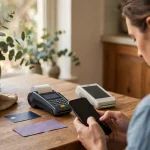
In Australia, tapping a credit or debit card is part of ordinary shopping: contactless card payments are accepted almost everywhere. Mobile wallets such as Google Pay and Apple Pay are similarly widespread. That makes switching between a physical card and a phone feel unremarkable in day-to-day life.
I’ve found that familiarity can create a false expectation when you move from a shop to an online payment page. A method that feels routine in person is not automatically offered by a particular website. The cashier has its own list of accepted methods, and everyday convenience tells you nothing about what will appear there.
People here are also comfortable moving between cards, mobile wallets and services connected to their bank, including PayPal. It’s less about loyalty to one payment tool and more about using whichever one fits the moment. I’ve done the same: reached for a card out of habit, then used a wallet or bank-linked service elsewhere. Easy to switch.
That broader habit is useful context when you’re thinking about Amex and casino payments, but it isn’t proof that a particular online cashier will accept Amex—or any other method you use in shops. Don’t read “accepted almost everywhere” as “accepted everywhere online.” Different setting.
For me, the practical takeaway is simple: separate what you can use in everyday Australian commerce from what a specific online service actually lists. Contactless cards and phone wallets are familiar options on the high street; bank-linked services are familiar too. None of that settles whether a particular cashier supports them. Check the payment choices shown by the service rather than assuming your regular tap-to-pay routine carries over.
That distinction matters because payment habits can feel universal when you use them every day. They aren’t. A phone wallet may be second nature at the counter, while an online payment page may present a different set of choices. Familiarity is not availability.
Accepted almost everywhere for ordinary shopping in Australia.
Google Pay and Apple Pay are widespread for daily high street use.
Services like PayPal are commonly used and easy to switch between.
When I compare Amex with Visa, I don’t treat a higher stated transaction limit as a sign that one card is automatically the better pick. A specialist review has reported that Amex limits can be higher than those attached to Visa or Mastercard options. That’s a comparison, not a promise about what a particular cashier will let you deposit: the available limit can depend on the casino and the card arrangements it accepts.
Visa has a different possible advantage. A specialist review has indicated that it may be accepted at more Australian online casinos than Amex. That doesn’t mean every site takes Visa, or that Amex is unavailable wherever Visa works. It does mean you shouldn’t assume that an Amex logo on a card settles whether it will be usable at a given cashier.
So the trade-off is fairly plain: Amex may come with a higher transaction ceiling, while Visa may offer wider acceptance. Neither point answers every practical question. A displayed limit is not the same as a guarantee that a payment will go through, and broad acceptance does not tell you whether a particular card transaction will be approved.
I’ve made the mistake of choosing a card based on one attractive detail and only later checking whether it suited the actual payment. “Higher limit” sounds decisive; in practice, it is only one part of the comparison. Look at the card options shown for the transaction and the terms attached to them, rather than assuming the general comparison applies unchanged.
This is a card-to-card distinction, not a universal ranking. If you already have Amex, its possible limit advantage may matter to you. If your priority is the chance of finding a card option supported by more sites, Visa may be the more practical one to check. Your own situation decides it.
If Amex is unavailable or you would rather use another route, the main contrast is between digital currencies and bank transfers. Neither option is automatically cheaper or more suitable; the details depend on the service handling the payment.
Bitcoin and Ethereum can support deposits and withdrawals that are processed instantly, with limited or no fees. That can sound like “no friction,” but it does not remove the need to understand how the payment works. A transfer in cryptocurrency is not the same as a card payment, and the amount ultimately received can depend on the transaction and the services involved. Speed alone is not a good reason to use it.
Bank transfers take a different path. A specialist review describes them as potentially slower and more expensive than other payment routes. That is not a fixed rule for every transfer, so check the terms attached to the service and your bank before acting. A lower-looking fee at one stage can be offset by a charge elsewhere. Slow, and possibly costly.
Amex is another comparison point, not a guarantee of a free transaction. A specialist review says deposits may carry no fee, but charges can depend on the casino; withdrawals may also involve a fee. That is why I would compare the full payment route rather than judge it by the label on the cashier button.
There is no universally best alternative here. Cryptocurrency may prioritise speed, while a bank transfer may suit someone who prefers moving funds through a bank account and can accept a longer wait. Card payments have their own acceptance and fee conditions. Read the terms before sending money, and don’t assume the same method will work for both directions.
This is payment information, not a recommendation to use an online casino. In Australia, real-money online casino services are prohibited for operators to provide to people in the country. If you are weighing payment methods, keep that legal reality in view too.
Check the casino’s cashier for Amex and review the payment terms before submitting anything. A listing or payment logo is not a guarantee that your transaction will be accepted.
Amex casino deposits are processed instantly. Withdrawals can take up to five days to clear.
Yes, some casinos accept Amex deposits, but acceptance is not universal and a payment may be blocked by Amex or your bank. A payment option does not make an online casino lawful to offer in Australia.
Amex deposits typically have no fee, but a casino may add a 1.5% surcharge, and Amex cards incur a 3% currency conversion fee. Check the payment terms and the total shown before submitting.
Sometimes, but not all casinos allow withdrawals to Amex, and you generally need to have deposited with Amex first. A withdrawal fee may also apply.
Deposits are typically free, but a casino may apply a 1.5% surcharge, and currency conversion on Amex incurs a 3% fee. Withdrawal fees may also apply, so check the cashier’s terms.
Yes, deposit and withdrawal limits are set by each casino and can vary. Check the limits shown in that casino’s cashier.