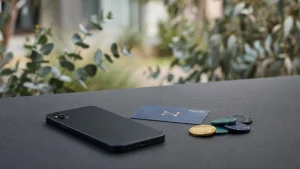
Neosurf availability depends on the specific service and transaction, so general payment habits and promotional labels are not reliable confirmation.

Australia’s everyday payment habits can make a new payment option sound familiar before you have checked whether it is actually supported. Contactless credit and debit cards are accepted almost everywhere in the country, and mobile wallets such as Google Pay and Apple Pay are too. Many people are also comfortable moving between cards, wallets and services linked to a bank, such as PayPal.
That tells you something useful about how people pay in general. It does not tell you which payment methods a particular online service accepts. I’ve made that mental jump before: a method feels ordinary in daily life, so I assume it will be available wherever I want to pay. That assumption is convenient. It is not evidence.
Neosurf belongs in a separate category of question. A person looking for an Australian online casino that accepts Neosurf is not really asking whether Australians use digital payments. They want to know whether the specific service they are considering will accept that method for the payment they have in mind. The popularity of tap-and-go cards or mobile wallets cannot answer that. Neither can the general comfort people have with bank-linked services.
The distinction sounds obvious when put plainly, but payment pages encourage shortcuts. You see familiar logos, recognise a wallet brand, or read a broad phrase about “popular payment methods” and start filling in the gaps yourself. I’ve done it. The logo can make a page feel more definite than its wording actually is. Familiarity is not confirmation.
A cashier is where a service presents the payment options it makes available to its customers. Australian habits outside that cashier do not establish what will appear inside it. A card accepted at local shops, for instance, is not automatically available on every online payment page. The same logic applies to mobile wallets and bank-linked services.
It also works in reverse: not seeing a method everywhere in daily life would not, by itself, prove that an online service does not offer it. General habits are background, not a reliable guide to an individual operator’s settings. Neosurf should be treated with the same care. You cannot infer acceptance from the fact that Australians are used to switching between different ways to pay.
That matters when terms such as “Australian Neosurf casino” or “Neosurf mobile casino” appear in a description. They may sound like a clear answer, but the wording alone does not show what a particular cashier supports. A broad label can describe an intended audience, a payment topic, or a promotional claim. It does not necessarily tell you what you will be able to select when you reach the payment screen.
I try to separate what a phrase suggests from what it actually establishes. “Popular with Australians” describes a supposed audience. “Accepts Neosurf” sounds more specific, but it still needs to refer to the service and payment action you are considering. A country’s overall payment preferences cannot fill in that detail.
Cards, mobile wallets and bank-linked services can all feel like variations on one simple idea: choose a method, authorise a payment, and carry on. But consumers switching comfortably among them does not make the methods interchangeable. Each is its own option, and its availability depends on the service offering it.
That is why a general statement about Australians being comfortable with digital payments should not be stretched into a claim about Neosurf. It does not show whether Neosurf appears in a particular cashier, whether the payment is offered to Australian customers, or whether the wording on a page is current. Those are separate details, not consequences of the country’s payment habits.
There is another small trap in the phrase “online pokies.” It can make the question sound as if the payment method and the games are part of one package. They are not the same question. A payment option, even if stated clearly, would not tell you what a service offers. And the fact that a payment method is common elsewhere does not tell you whether it is accepted for any particular online gambling transaction.
So, if you came here wondering whether Australian payment habits make Neosurf acceptance likely, the honest answer is that they do not establish it. They explain why people may be comfortable with several digital payment types. They cannot confirm a particular service’s options. Keep those ideas apart. It saves a bad assumption.
I wouldn’t treat the broad popularity of contactless cards, Google Pay, Apple Pay or PayPal as a shortcut to a Neosurf answer. They are useful context about how people in Australia pay day to day, nothing more. A familiar payment culture can make a claim feel plausible; it cannot make it true for an individual cashier. That is the line worth holding. Familiarity isn’t proof.
A payment logo on a page is not the same as a deposit option you can use. I would treat any claim about paying with Neosurf as something to check at the point where the transaction would actually be made, rather than assume that a mention elsewhere applies to my account. That distinction matters: a method can be described on a general payments page but not appear as an available choice in the cashier.
Before deciding to deposit, open the cashier while signed in and look for Neosurf among the options for adding funds. Check the wording on the screen, not just a promotional banner or an old review. If the option is absent, do not try to force the transaction through a different method or assume that support can make it work. Ask the operator or payment provider directly whether Neosurf is available for your account and location, and wait for a clear answer.
I used to read a payment-method mention as a green light. It isn’t. The cashier is the practical checkpoint, and a direct answer from the relevant provider is more useful than a vague statement on a landing page. If the information conflicts—for instance, one page mentions Neosurf but the cashier does not show it—pause and ask which information applies before sending money.
Do not assume that a deposit limit shown for one payment method applies to another. Look for any minimum or maximum displayed beside Neosurf in the cashier, and check whether the screen states that the limit applies to a single transaction or to your account more broadly. If no limit is visible, ask the operator or payment provider to confirm it before proceeding. A guess based on what you have deposited elsewhere is still a guess.
This point is easy to overlook when you are searching for a small deposit amount. A figure in a search phrase does not establish that a particular cashier will accept that amount, and a limit can depend on the method and operator. I would not enter a payment code or submit a transaction until the amount shown on the confirmation screen matches what I intend to pay and the cashier has made the relevant terms clear.
A specialist review discussing American Express reported that deposit and withdrawal limits can differ between online casinos. That observation is about Amex, not Neosurf, so it cannot establish a Neosurf limit. It does underline why I check the actual method and cashier instead of borrowing a figure from another payment option.
The cashier should make any stated transaction charge visible before you submit. Check the payment provider’s terms as well, because the operator’s screen may not explain every condition imposed by the provider. If you cannot tell whether a fee applies, ask both sides which charges could be taken and when. Do not treat the absence of a fee notice in a short description as proof that there are no costs.
I also pause at the final confirmation screen. It is the last place to compare the amount being charged with the amount the cashier says will be credited. If either figure or the fee information is unclear, stop and get an explanation rather than finding out after the transaction. No need to rush it.
Keep your own record of the terms you checked and the response you received, especially if the cashier’s wording is incomplete. That is not a substitute for confirmation from the operator or payment provider; it simply gives you something concrete to refer back to if the details change or the transaction does not go as expected.
The useful test is not whether a page says “Neosurf accepted” in broad terms. It is whether the cashier currently offers the method for your account, whether it will accept the amount you intend to enter, and whether the costs are stated clearly enough for you to make an informed decision. If any one of those points is unresolved, I would leave the transaction there. Better to stop before paying than to assume the missing detail will sort itself out.
“Best” is doing a lot of work in a headline. It might mean a reviewer liked the site’s layout, compared its general reputation with other operators, or simply chose a phrase that attracts attention. None of those meanings establishes that Neosurf is accepted. I’ve learned to treat the word as an opinion, not a payment confirmation.
A page calling something the best Neosurf casino may sound specific, but the label alone tells you very little. Does it refer to Neosurf being mentioned somewhere on the site, or to a current option for a particular transaction? Is the claim based on an operator’s own information, or repeated from another review? Without clear evidence behind it, “best” is just packaging.
The same goes for lists of casino sites that supposedly take Neosurf. A list can look decisive while leaving the important point unresolved: whether the claim reflects the operator’s current arrangements. Payment information can change, and a review may stay online after its details have become stale. A confident ranking does not make old information current.
There is another wrinkle: “best” can refer to very different things. A reviewer might be judging the overall site, its payment choices in general, or its reputation with readers. Those are not interchangeable with a confirmed Neosurf option. Even a page that discusses payment methods may not make clear whether it is describing a live offering, a past one, or a broad list assembled from second-hand descriptions.
I’m wary of neat rankings for that reason. A numbered order can make subjective judgements look measured, even when the page does not explain what was compared or how the claims were checked. A polished table is not proof either. Presentation can make a weak claim look solid. It can’t supply the missing evidence.
Look for the substance behind the label instead. A useful claim should say what it means, identify where the information comes from, and make clear how current it is. If a page only says that a casino is “trusted,” “top-rated” or “best for Neosurf,” those words do not tell you whether Neosurf is actually supported. They describe a judgement, not a verified payment fact.
That distinction matters in Australia, too. A page may use Australian wording or present itself as a guide for local readers without that alone establishing anything about the operator’s services or the accuracy of its payment claims. Local-sounding copy is not evidence. Nor does a general recommendation turn a payment method into a confirmed option.
I wouldn’t treat mentions of Neosurf in a headline, a comparison chart or a list of popular payment methods as interchangeable. The more specific the claim sounds, the more tempting it is to accept it without looking at its basis. That’s how a broad description can get mistaken for a definite answer. Slow down a moment.
The word “best” can still be useful as a starting point: it tells you what the page is trying to argue. But it should not settle the question for you. Read past the adjective and ask whether the page offers a clear, current basis for its Neosurf statement, rather than relying on a ranking, a slogan or a generic description of payment choice.
And don’t let a list of “best” sites imply that a particular method works just because it appears beside an operator’s name. The list may be recommending the site for unrelated reasons. A broad endorsement and a specific payment claim are separate statements; one does not prove the other. No ranking changes that.
I used to read a payment logo as if it answered every money question at once. It doesn’t. A method shown for adding funds tells you about that deposit option; it does not, on its own, tell you how a later payout would be handled or how long one might take.
That distinction matters when a payment method appears in a cashier. “Accepted” can sound like a complete promise, but it may describe only one action. Depositing and receiving winnings are separate transactions, and the available methods, checks and processing stages may differ. A deposit option is not evidence of a matching withdrawal route.
Nor does the word “instant” settle the question. It might be used loosely in promotional language, while a withdrawal can involve steps beyond the payment method itself. The method’s name cannot establish that a payout is supported, that it will be processed immediately, or that funds will arrive by a particular time. I’ve learned to treat those as separate claims, not assume one follows from the other.
Attention: A deposit option is not evidence of a matching withdrawal route; these are separate transactions with different rules.
There can also be account checks before money moves. Online gambling services commonly ask customers to complete identity and customer-due-diligence checks before carrying out financial transactions. That means a payment method alone cannot tell you whether an account is ready for a transaction or whether further review is needed. The details of any checks and their effect on timing are matters for the service’s stated terms.
So if you see Neosurf mentioned in connection with a deposit, don’t stretch that mention into a conclusion about withdrawals. It does not establish that Neosurf can be used to receive a payout, nor does it give a reliable withdrawal timeframe. Those are distinct points that need their own clear confirmation. A deposit listing is not a payout policy.
I’d also be wary of a page that bundles deposit acceptance, withdrawal support and speed into one confident sentence without separating them. “Fast” is a description, not a schedule. “Available” can refer to one transaction direction and not the other. The useful question is what the specific statement actually covers: funding an account, requesting a withdrawal, or the time for the funds to reach you. If that is not made clear, the claim leaves the important part unanswered.
For any money decision, keep the two sides of the transaction mentally separate. A payment choice might be relevant when funds go in, while a withdrawal may be subject to different procedures and account checks. Don’t infer the second from the first, and don’t treat a claim of instant deposits as proof of instant payouts. Those are different promises.
If you’re looking for a casino that accepts Neosurf in Australia, check that the payment method is currently available to you and review the relevant terms before signing up. The details below provide a limited reference point for each listed operator.
DragonSlots Casino
DragonSlots Casino is listed with a Curacao Gaming Authority licence held by Jumpman Gaming Ltd. The available information does not specify Neosurf availability.
Playfina Casino
Playfina Casino is listed with a Curacao eGaming licence held by Hollycorn N.V. since 2017. Its minimum deposit is A$20–30 depending on the offer; Neosurf availability is not specified.
7Bit Casino
7Bit Casino is listed as a Curacao operator run by Dama N.V. The available information does not specify Neosurf availability.
Roby Casino
Roby Casino is listed with a Curacao eGaming licence held by Roby Games Ltd. The available information does not specify Neosurf availability.
SpinsUp
SpinsUp is listed with a Curacao Gaming Control Board licence, OGL/2023/174/0082, held by Dama N.V. The available information does not specify Neosurf availability.
Neospin
Neospin is listed with a Curacao Gaming Control Board licence, OGL/2023/176/0095, held by Hollycorn N.V. The available information does not specify Neosurf availability.
Ricky Casino
Ricky Casino lists crypto payouts under an hour and PayID payouts in 1–3 business days. The minimum deposit is A$20, or A$30 to qualify for the bonus; Neosurf availability is not specified.
Kingmaker
Kingmaker lists crypto payouts at about 90 minutes and fiat payouts in 1–5 days, with a minimum deposit of A$30. The available information does not specify Neosurf availability.
SkyCrown
SkyCrown is listed with a Tobique Gaming Commission licence. Its stated payout times are about 10–15 minutes for crypto and 1–5 days for fiat, and its minimum deposit is A$30; Neosurf availability is not specified.
House of Pokies
House of Pokies is described as holding an international iGaming licence, though the jurisdiction is not named in the source. PayID payouts are listed at 1–24 hours, with a minimum deposit of A$30 or A$10 for PayID; Neosurf availability is not specified.
“Accepts Neosurf” sounds like a simple yes or no. I used to read it that way: if a page said a site took a payment method, I assumed I could use it. That skips the detail that matters. Acceptance needs to describe a particular payment action, for a particular customer, through the cashier they can actually access.
A broad sentence on a site page might describe a payment method in general, not confirm that it is available for an Australian account. It might also be out of date, or refer to a different action from the one you have in mind. “Neosurf is supported” is not precise enough on its own. Supported for what? A deposit, a withdrawal, or something else? The wording should make that clear rather than leaving you to fill in the blanks.
The cashier is the relevant place to establish what options are presented for your account at the time you use it. A general payment-method page can help you understand what a service says about itself, but it does not show what your own cashier will offer. Nor does a logo, a mention in a review, or a page title prove that Neosurf is selectable for the specific payment you intend to make.
That distinction matters when looking for a casino said to take Neosurf in Australia. The phrase can refer to a claim about a brand, a payment method, or a specific transaction. Those are not interchangeable. A site might describe a method broadly while the cashier presents a different set of options to an individual customer. Treat the claim as a prompt to establish its scope, not as confirmation by itself.
I also separate “can use” from “can use right now.” Payment arrangements can change, and an older description may not match what appears in a current cashier. The useful question is not whether Neosurf has ever been mentioned alongside a service. It is whether the current cashier shows it for the action being discussed, under the account and location in question.
So when someone says a service accepts Neosurf, I want the statement to be narrow enough to test: the payment action, the customer context, and the current cashier should all line up. If one part is vague, the claim is still vague. That is not nit-picking. It is the difference between a general description and an option you can actually see.
A “Neosurf casino” label can compress all of that into two words, but the label does not settle the question. I would not treat it as proof, or as a recommendation. Exact scope matters.
A payment method and a game catalogue answer different questions. Seeing Neosurf mentioned in a casino payment context would not tell you what games a service offers; nor would a description of its games establish that Neosurf is an available way to pay. I used to read those details as if they came as a package. They don’t.
Think of them as separate checks. Payment information concerns whether a particular transaction can be made under the cashier’s current terms. Game information concerns what content the service makes available to an account. One does not prove the other. A page that puts both subjects close together may make the connection look stronger than it is.
That matters when a site uses broad wording such as “Neosurf casino games.” It can sound as though the payment method identifies a particular set of games, or that games described on the same page can all be accessed after paying that way. The wording alone supports neither conclusion. It may simply be combining two topics.
The same caution applies in reverse. A game catalogue, a category label, or a prominent image cannot establish which payment options the cashier currently supports. And the presence of a payment logo or a general payment-method description does not show what content is available. Separate claims need separate evidence. Simple, but easy to miss.
I’ve found it useful to pause when a page blurs those ideas. Ask what each statement actually says: is it about paying, or about the service’s content? Is it specific, or just a broad description? If the wording leaves the distinction unclear, don’t fill in the gap yourself. A payment choice is not a content filter.
This is not a claim that Neosurf works at any particular casino, or that any particular games are available. It is a way to avoid treating a payment label as proof of something it does not establish. The phrase “casino games with Neosurf” may bring the two subjects together grammatically; that does not make them the same thing.
Keep the questions apart. First, payment information has to stand on its own. Separately, content information has to be clear and current. Neither should be inferred from the other. No hidden link.
Payment information concerns transaction possibilities under current terms, while game information concerns available content; one does not prove the other.
A payment method can make a site look like an ordinary place to spend money. It does not make the service lawful in Australia. The Interactive Gambling Act 2001 makes it illegal for operators to provide online casino games to people in Australia. That rule applies to the operator, not just to the payment option shown in a cashier.
The Australian Communications and Media Authority (ACMA) is responsible for enforcing the Act. So if you see a site described as an Australian casino that accepts Neosurf, treat “Australian” as a claim about the intended audience, not proof that the operator is authorised to offer casino games here. Neosurf cannot change the legal status of the service.
There is an important distinction for players, too. The Act does not expressly make an individual player’s use of an offshore casino a criminal offence. That is not the same as saying the arrangement is protected or endorsed. Australian consumer law does not protect players who use offshore casinos. If there is a dispute, a payment problem or trouble getting an account issue resolved, you should not assume Australian consumer protections will apply.
I used to read a familiar payment logo as a kind of reassurance: if a site offered a method I recognised, I assumed the rest had been checked too. That was a bad shortcut. A payment option tells you nothing about whether an operator may legally offer online casino games to people in Australia, and it does not create consumer protection where the service is offshore.
The legal position is separate from whether a Neosurf payment appears to work. Keep those questions apart: a cashier listing is not a legal approval, and a completed transaction is not evidence that Australian consumer law covers the service. Not the same thing.
A deposit option and a withdrawal option are not automatically the same thing. If a cashier lets you choose Neosurf to add funds, that alone does not show that Neosurf can also be used to receive a withdrawal. The two actions need separate confirmation.
That distinction matters when you’re trying to work out whether a casino withdrawal through Neosurf is possible. I can’t confirm that Neosurf withdrawals are supported, or how long one would take. So I wouldn’t treat a deposit reference as proof of a withdrawal method, or rely on a claimed processing time unless the operator’s current terms state it clearly.
The wording can get slippery. A page may describe Neosurf as a payment option without making clear whether that means deposits, withdrawals, or both. “Available” sounds reassuring; it may leave the important part unanswered. I’ve made that mistake with payment claims before: I read the label and assumed it covered the whole transaction. It didn’t.
For any online service, check the withdrawal information as its own question. Look for a direct statement about whether Neosurf can be selected to receive funds, and whether any conditions apply. If the wording only discusses deposits, don’t fill in the gap yourself. If the cashier and the written terms appear to disagree, the difference matters; don’t treat either as a promise that a withdrawal will work.
Legal Status
Using offshore casinos is not protected by Australian consumer law, and Neosurf acceptance does not make such services lawful in Australia.
The same caution applies to searches about Neosurf withdrawals at pokies sites in Australia. A phrase saying “Neosurf accepted” does not establish withdrawal support, and it says nothing reliable about timing. I can’t confirm a Neosurf withdrawal route or a clearing period here.
Keep the decision plain: deposit support is one claim; withdrawal support is another. Until the latter is stated for the specific account and payment action, don’t build plans around receiving funds through Neosurf. No assumption is worth a cash-flow surprise.
A payment option appearing in a cashier is only one part of the transaction. Before submitting anything, read the amount and currency shown on the payment screen, then check whether the cashier or payment provider displays a fee. I’ve learned not to treat the amount I type as the whole cost.
Currency matters because a transaction can be converted if the payment is processed in a currency different from the one you expect. A specialist review reports a 3% currency-conversion fee on Amex cards; that is a card-specific point, not a rule for every payment method. The useful habit is to check the currency and conversion terms that apply to your own transaction rather than assume the displayed balance tells the whole story.
Fees can also depend on the operator and the payment method. A specialist review describes Amex deposits as generally fee-free, while noting that casino charges can differ and withdrawals may carry fees. That does not establish what a Neosurf transaction will cost. For Neosurf, rely on the terms displayed for that payment, not on a claim about another method.
Before you confirm, make sure the cashier shows the amount you intend to pay and that you understand any conversion or service charge disclosed there. If the cost is unclear, pause and ask the payment provider or operator to explain it before proceeding. A vague “no fees” label is not much use if it leaves out currency conversion or a separate charge.
Keep the confirmation screen or receipt so you can compare the amount submitted with the amount recorded. That small check has saved me from guessing after the fact. Read the final screen slowly.
A casino bonus and a payment method answer different questions. A promotion might say something about an offer, but that wording does not show that Neosurf is available for deposits. In the same way, seeing Neosurf mentioned as a payment option would not establish that a particular offer applies to payments made with it.
I used to read a page as if every reassuring label belonged to the same package. It doesn’t. “Neosurf bonus” can sound like a clear promise, when it may just place a payment name beside promotional wording. The phrase alone says nothing reliable about whether the method is accepted or whether a bonus is linked to it.
The reverse assumption is just as shaky: a bonus mentioned on a casino page does not confirm that Neosurf works there. And a payment option, even if stated, does not confirm that a bonus is available to someone using it. Separate claims need separate evidence.
So if you encounter wording about a Neosurf casino bonus, treat it as a description to assess, not proof of payment compatibility. Don’t infer one from the other. Small distinction. Big difference.
I would also avoid treating promotional language as a reason to make a payment. It can distract from the basic question of what the claim actually establishes. A bonus label is not a cashier confirmation, and a cashier listing is not confirmation of bonus eligibility. Keep those ideas apart, and the wording becomes easier to judge without reading more into it than it says.
Sign in and check the casino cashier for American Express as a deposit option. A general payment-method claim does not confirm that Amex is available for your account.
Amex deposit and withdrawal limits are set by each casino and can vary. Check the limits shown in that casino’s cashier.
Amex deposits typically have no fee, but a casino may add a surcharge, and currency conversion can incur a fee. Withdrawals may also carry a fee.
Some casinos do not allow withdrawals to Amex. Where they do, you generally need to have deposited with Amex first.