A practical security check starts with Australia's rules, then considers payments, verification, fairness and warning signs.

When I think about what makes an online casino secure, I start with a less exciting check than encryption or account settings: whether the service is lawful for people in Australia to use. I used to treat “secure” as a technical label, as if a tidy website and a padlock symbol answered the important questions. They don’t. The legal position comes first.
The Interactive Gambling Act 2001 prohibits operators in Australia from offering online casino games to Australian residents. The rule covers real-money casino play, including online slots and table games. A site can look polished, use familiar casino language and accept Australian visitors; none of that changes what the law says about providing those games to people here.
That distinction matters because the law is aimed at the service provider. The Act does not explicitly criminalise an individual player for using an offshore casino site. So it would be wrong to tell you that simply visiting or playing on such a site automatically makes you a criminal. It would also be wrong to turn that point into reassurance that offshore play is approved or protected. Those are different claims.
I find it helps to separate three questions that often get blurred together: whether a service is permitted to offer casino games in Australia, whether a player faces criminal liability, and whether the service is secure in a technical sense. The first has a clear answer under Australian law: operators cannot provide these online casino games to residents. The second is not the same prohibition applied to the player; the Act does not explicitly make the player’s use of an offshore site a criminal offence. The third question cannot settle either of the first two.
“Secure” is a comforting word. It may refer to how a website handles information, but it does not mean the operator is authorised to offer casino games to Australians. Nor does it convert an offshore licence into permission to operate here. A licence from another jurisdiction, if a site has one, is not an Australian authorisation. I would not infer local legality from a badge, a headline, or the fact that a site loads on my screen.
This is where searches for the most secure online casino in Australia can lead people astray. The wording makes it sound as if the task is simply to compare sites and find the strongest one. But no security feature answers the threshold legal question. Before weighing a site’s claims, establish what kind of service it is offering and whether that offer is lawful for a person located in Australia. A technical assurance cannot make a prohibited offer lawful.
The same caution applies to “Australian-friendly” wording. That may describe a site’s language, currency options or intended audience; it does not prove that the operator is entitled to provide online casino games here. I have learned not to treat convenience as evidence. Access is not approval.
There is also a practical trap in assuming that a workaround changes the legal status. Using a VPN to reach a casino site may breach the site’s own terms and could lead to winnings being voided, an account being closed or a deposit being lost. A VPN does not turn an offshore operator into one licensed in Australia, and it is not a way to make the offer lawful. Not a safety net.
For Australian readers, the basic legal line is therefore straightforward, even if websites make it feel murkier: domestic operators are prohibited from providing online casino games to residents, while the law does not explicitly criminalise individual players who use offshore sites. That does not amount to a recommendation to play. It is a description of where the law draws the line between operator and player.
I would keep that distinction in mind whenever a site calls itself safe, trusted or secure. Those are claims to examine, not legal conclusions. First ask whether the service is permitted to offer the games to people in Australia. Only then does it make sense to consider what “secure” might mean in relation to the site itself.
Legal Status
Domestic operators are prohibited from providing online casino games to residents under the Interactive Gambling Act 2001. A technical security feature cannot make a prohibited offer lawful.
A balance on a casino screen can feel like money already in your pocket. I used to treat it that way: I saw a number, assumed a withdrawal would follow, and only thought about the operator’s rules when something went wrong. That is a costly order to do things in. With an unlicensed gambling service, the practical question is not just whether you can deposit. It is what happens if the operator refuses to return your funds.
Australian consumer protections are not a safety net for an offshore casino that is not licensed here. If it holds a withdrawal, closes an account or disputes a balance, you may have little effective way to make it put things right. Australian laws may not assist you in recovering winnings from an unlicensed service. The operator may be based overseas, and the terms you accepted may point to a process or jurisdiction that is difficult to use from Australia. A support chat can answer you; that does not mean it can compel the company to pay.
That distinction matters. “Secure” can mean a connection is protected or an account has a password. It does not mean an Australian authority supervises the operator, guarantees your balance or can resolve a dispute in your favour. I learned to separate the appearance of a tidy account page from the question that actually matters: who can help if the money does not come back? Not the same thing.
ACMA is Australia’s main online gambling regulator. It can take action against operators that breach the Interactive Gambling Act 2001, including asking internet providers to block a site and imposing fines. Those powers are aimed at enforcement; they are not a personal refund service for someone whose winnings are withheld. A blocked website may become harder to access, but that does not retrieve a balance or settle an account dispute. Enforcement and individual recovery are different jobs.
Before sending money anywhere, check what the service is actually authorised to offer in Australia. ACMA’s public register can help you verify whether a wagering service holds a valid Australian licence. Do not assume that a foreign licence, a familiar brand name or an Australian-looking page means the service is licensed in Australia. Nor should the register be treated as a stamp of approval for online casino games: a wagering licence does not make prohibited casino services lawful for Australian customers.
If a site says it is “Australian licensed,” look for confirmation through the official register rather than relying on a badge, a logo or the site’s own wording. If you cannot verify the claim, treat it as unverified and do not deposit. I have made the mistake of letting confident language do the checking for me. It is a bad shortcut.
Read the withdrawal and account terms before making any payment, particularly the clauses about withheld funds, account closure and disputes. Keep copies of the terms and relevant messages if you have already dealt with a service. That may help you understand what the operator is claiming, but it does not create an Australian remedy where none is available. If you are dealing with an unlicensed service, assume you may not be able to recover the money through Australian consumer channels.
Attention: Australian consumer protections are not a safety net for offshore casinos not licensed in Australia; you may have no effective way to recover withheld funds.
Using a VPN to get around a block does not improve your protection. It may breach the operator’s terms and can lead to winnings being voided, an account being closed or a deposit being lost. A different route to the same site does not change its licensing position. It can make an already difficult dispute worse.
The phrase “safe and secure” is often used as if it settles every concern. It does not. A site can look polished, accept a deposit and still leave you exposed when you ask to withdraw. The hard part is not making the first payment. It is having somewhere useful to turn if the operator keeps the money. Check first. Then decide whether the risk is one you are willing to carry.
A payment button can make a deposit feel straightforward: choose PayID, approve the transfer, and the money may move quickly. But a speedy deposit tells you very little about how money would come back out. The operator may use different routes for deposits and withdrawals, apply its own approval step, or have limits on which methods it will use to return funds. I learned not to treat “instant” as a description of the whole payment journey.
A specialist gambling-payment review describes PayID transfers as moving through Australia’s New Payments Platform and potentially clearing within minutes once released. That is a useful comparison point, not a promise about every transaction. “Fast” still depends on the transfer being released, and the time taken before that point is separate from the network’s processing time. A pending payment is still pending.
The same specialist review says PayID and some e-wallet payments may be quick after approval, while bank transfers and card payments can take several business days. Those are broad route comparisons, not a service guarantee. A bank or card processor may add its own handling time, and the operator may need to approve a withdrawal before the payment provider receives it. So a deposit that appears promptly does not establish that a withdrawal will follow at the same pace.
That distinction matters most when a payment page presents one method as if it covers both directions. Check the withdrawal terms separately from the deposit options. Is the method accepted for cashing out, or only for putting funds in? Does the operator say withdrawals go back through the original route, or can it use another one? What steps must be completed before a payment is released? If those details are vague, don’t fill the gaps with optimism.
POLi is a good example of why the direction matters. A specialist gambling-payment review characterises it mainly as a deposit method, so its presence on a cashier page should not be taken to mean that withdrawals can be sent through it. Look for an explicit withdrawal route instead. A familiar payment name is not evidence that both sides of the transaction work the same way.
Cards can be less predictable on the way out, too. According to a specialist gambling-payment review, card withdrawals may take longer or may not be available, depending on the processor. That is why “cards accepted” can be a thin detail: it may describe deposits only. Read the wording attached to withdrawals, rather than assuming the logo tells the full story.
When I compare payment claims, I separate three stages: how quickly I can authorise a deposit, how long approval takes before a withdrawal is released, and how long the payment provider takes after release. Those stages are easy to blur together in promotional language. “Quick payouts” may refer to only one of them—or leave the timing unclear altogether. I’d rather see the route explained plainly than rely on a badge or a confident adjective.
For Australian readers, this is a way to scrutinise payment claims, not a recommendation to use an offshore casino. Real-money online casino games cannot lawfully be offered to people in Australia. If you encounter payment information while assessing a site, treat unclear withdrawal terms as a reason to pause, not as a small inconvenience to sort out later.
A quick deposit is only the first leg. Check the return route.
When choosing an online casino in Australia, check what is known about its licensing and payment arrangements rather than relying on a “secure” label alone. This list gives you a concise reference to the available details; the information provided does not establish overall security.
DragonSlots Casino
DragonSlots is listed with a Curacao Gaming Authority licence held by Jumpman Gaming Ltd. That licensing detail is the available basis for considering it in this reference.
Playfina Casino
Playfina is listed with a Curacao eGaming licence held by Hollycorn N.V. since 2017. Its minimum deposit is A$20–30, depending on the offer.
7Bit Casino
7Bit is listed as operating under a Curacao licence, with Dama N.V. as its operator. These are the available licensing details for your review.
Roby Casino
Roby is listed with a Curacao eGaming licence held by Roby Games Ltd. The supplied information identifies its licensing, but provides no further details.
SpinsUp
SpinsUp is listed with Curacao Gaming Control Board licence OGL/2023/174/0082, held by Dama N.V. This licence reference is the available detail for you to assess.
Neospin
Neospin is listed with Curacao Gaming Control Board licence OGL/2023/176/0095, held by Hollycorn N.V. The supplied information is limited to this licensing detail.
Ricky Casino
Ricky Casino lists crypto payouts under 1 hour and PayID payouts in 1–3 business days. The minimum deposit is A$20, or A$30 to qualify for the bonus.
Kingmaker
Kingmaker lists crypto payouts at about 90 minutes and fiat payouts in 1–5 days. Its minimum deposit is A$30.
SkyCrown
SkyCrown is listed with a Tobique Gaming Commission licence. Its stated payout times are about 10–15 minutes for crypto and 1–5 days for fiat, with a A$30 minimum deposit.
House of Pokies
House of Pokies is described as holding an international iGaming licence, but the jurisdiction is not named in the source. It lists PayID payouts in 1–24 hours and a A$30 minimum deposit, reduced to A$10 for PayID.
“Best” can sound like a promise that somebody has tested every site and found a safe one. I don’t read it that way. A secure-looking website may protect information moving between your device and its server, but that does not make its gambling service legal in Australia or guarantee fair treatment. I separate the checks you can actually make from the claims designed to reassure you.
Start with the connection. Casinos use SSL encryption to protect transactions and sensitive information as it travels between your browser and the site. Look for a secure connection in the browser, then check that the site’s address and identity match the service you intended to visit. That tells you something about the connection; it does not prove who ultimately runs the service, whether it is authorised here, or how it would handle a dispute. A padlock is not a licence.
One check, not the whole answer.
Next, read the account and withdrawal terms for identity verification. Casinos conduct KYC checks and may require you to prove who you are before a withdrawal is processed. The requested documents commonly include photo identification, proof of address and proof that you own the payment method used. I’d want to know what the service asks for and how it says documents are submitted before sharing sensitive details. A KYC process can be a security measure, but its existence alone does not establish that a site is trustworthy.
Then check any claim of an Australian licence carefully. ACMA’s public register can help you verify whether a wagering service holds a valid Australian licence. But don’t let a vague badge or the word “licensed” do the work for you: a wagering licence is not evidence that an online casino is authorised to offer casino games to people in Australia. Under the Interactive Gambling Act 2001, operators cannot provide real-money online casino games to Australian residents. There is no Australian online-casino licence that makes such an offer lawful.
That distinction matters when a site borrows credibility from a regulator or mentions an offshore licence. An offshore licence is not the same as being licensed in Australia. If a service claims an Australian licence, look for the exact service in ACMA’s register and check what kind of gambling it is authorised to provide. If the claim cannot be matched to the register, don’t treat it as verified. No clever badge fixes that.
Fast payouts are another phrase I’d keep separate from security. A payment claim says nothing by itself about encryption, identity handling or Australian authorisation. Likewise, a polished design and familiar payment logos do not replace checking the actual service and its terms. I’ve learned not to confuse a smooth front end with a safeguard.
And don’t use a VPN to get around access restrictions. Doing so may lead to winnings being voided, an account being closed, or a deposit being lost. The “secure” label is not a shortcut through the legal and practical checks. There isn’t one.
A welcome bonus can make an offer look like a safer or more generous way to start. I used to treat that sort of wording as a sign that someone had checked the service for me. It hadn’t. “Welcome” is promotional language, not a statement about whether an operator is allowed to serve people in Australia.
The legal position comes first. Under the Interactive Gambling Act 2001, domestic operators cannot offer online casino games to Australian residents. Online slots and games such as blackjack are illegal when offered to people in Australia. A bonus attached to those games does not change their legal status, no matter how carefully an offer is written to sound Australian-facing.
That distinction matters when an advert mentions a bonus for Australians, Australian players or local payment options. Those words may describe the audience an operator hopes to attract; they do not establish that the service is authorised here. Nor does a polished page, familiar currency or customer support aimed at Australians make a prohibited casino offer legitimate.
I learned the hard way not to read a headline as a promise. “Free” can draw your attention away from what the offer actually asks you to do, and “secure” can sound like an endorsement when it is only a sales claim. But even clear terms and a tempting welcome offer cannot make online casino games lawful for Australian residents. The offer is not the legal test.
Be especially wary of anyone suggesting that a VPN makes an offshore casino bonus safe to claim. Using a VPN to access a casino may lead to winnings being voided, an account being closed, and your deposit being lost. A bonus is no protection against those outcomes, and changing how your connection appears does not change the Australian legal position.
So if you are looking for a safe and secure online casino with a welcome bonus, pause before treating the promotion as a reason to sign up or deposit. The key question is not whether the offer looks generous, but whether the underlying online casino service can lawfully be offered to people in Australia. For online slots and casino games, the law draws a clear line. Bonus language does not move it.
That is the part the banner leaves out. A careful reader does not have to accept its framing: promotional claims and legal permission are separate things. Don’t confuse them.
VPN Risks
Using a VPN to claim bonuses or access sites may lead to your winnings being voided, your account being closed, or your deposit being lost.
A wallet can make a deposit feel straightforward, but that says little about what happens when you ask to withdraw. E-wallets may process a withdrawal after the operator has approved it, while a bank transfer can take several business days. A specialist review describes those routes, but processing varies by service and payment provider. Check the withdrawal terms for the specific method rather than assuming the speed you saw at deposit will carry over.
The step that often changes the timeline is identity verification. Gambling services conduct KYC checks and may require them before releasing a withdrawal. Common requests include photo identification, proof of address and evidence that you own the payment method used. If those details do not match the account, or documents need another look, approval can take longer. Keep the payment method in your own name and read the verification instructions carefully. No shortcut there.
I used to treat a quick-looking payment option as a sign that the whole service was well run. It isn’t. A secure wallet and a smooth transfer are narrow clues about payment handling, not proof that an online casino is safe or that you will be paid without dispute. That distinction matters.
For a pokie’s published return to player, or RTP, open the game’s information or help screen. It is commonly tucked behind an “i” icon or a menu. The figure shown there is more useful than a number in promotional copy because it relates to the version of the game being presented. Still, it is not a promise about what one player will receive in a session.
There is another wrinkle: some game providers release the same title in multiple RTP versions, and the operator selects which version to offer. So a published figure attached to a game name elsewhere may not match the version on the screen you are viewing. Check the game’s own information panel, and don’t treat a higher displayed RTP as evidence that the service itself is trustworthy.
I’d keep these checks separate: payment timing, identity approval and the game’s stated RTP answer different questions. And none of them turns an offshore online casino into a service licensed in Australia. If a withdrawal depends on verification, know what documents may be requested before depositing. If the game screen is hard to find or its details are unclear, don’t fill the gaps with assumptions.
Small checks. Different risks.
Security is not only about keeping someone else out of your account. It also means having ways to pause, set boundaries and find help when gambling stops feeling manageable. I learned that the hard way: a site can make it easy to keep playing, while the decision to step away is left entirely to you.
There is an important Australian distinction here. The Interactive Gambling Act 2001 prohibits operators from providing real-money online casino games to people in Australia. So references to “licensed online casinos” and their safeguards should not be read as proof that an online casino is licensed in Australia or regulated for Australian residents.
A specialist review describes deposit limits as a feature offered by some licensed online casino services, with settings that can be made daily, weekly or monthly. That is a description of a feature, not a guarantee that an offshore site offers it, applies it properly, or gives Australian players local protection. If you encounter a limit tool, check what it actually controls and whether the operator explains how changes take effect. A button is not a safety net.
If you are worried about your gambling, professional support services such as Gambling Help Online can provide more useful assistance than a site's own internal tools.
I would also look for clear information about gambling-related harm and direct links to professional support in Australia. Reputable platforms provide this kind of information, but its presence does not make a prohibited service lawful or establish that its safeguards will work when you need them. If you are already worried about your gambling, a support service such as Gambling Help Online can be a more useful next step than relying on a site’s own “responsible play” message.
The practical test is whether the controls are understandable and easy to find before you deposit, and whether the support information leads somewhere beyond the operator’s own pages. If limits are hard to locate, or help is buried behind promotional language, I would not treat that as meaningful protection.
Online casino safeguards advertised to Australians can sound reassuring. But deposit controls and help links do not change the legal position, and they cannot promise that a service will protect you from harm. Take a pause before money is involved. That matters more.
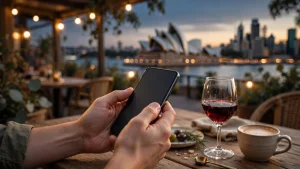
A phone can make a casino-style game feel like an ordinary app, but the screen does not change the rules. In Australia, online slots and other casino games, including blackjack, are illegal for operators to provide to people here. A mobile site or app is still an online service; being easy to open on your phone does not make it authorised.
I used to treat a polished interface as a kind of reassurance. That was the wrong test. “Mobile-friendly” tells you about layout, not whether the service is lawful or whether a game’s settings are fair. There is no special category of secure mobile casino that becomes acceptable because it loads smoothly or looks professional.
A VPN does not solve that problem. Using one to access a casino may lead to winnings being voided, an account being closed, and your deposit being lost. I would not treat a location workaround as protection. It can create another complication instead.
There is still a useful fairness check for the game itself. If you are looking at a pokie, open its information or help screen and find the RTP, often under an “i” icon or a menu. RTP is a published game setting, not a promise about what will happen in a particular session. Finding it is worth doing, but it does not establish that the operator is lawful or that playing through a mobile interface is safe.
One detail that can be easy to miss: a provider may release the same game with different RTP versions, and the operator chooses which version to offer. So recognising a game’s name is not enough to know its configured RTP. Check the information shown for the actual game you are viewing rather than relying on a description elsewhere.
That distinction matters. The game screen can help you inspect a published setting; it cannot turn a prohibited online casino service into a legitimate option for Australians. Smooth touch controls are not a fairness certificate.
A site presented as a secure Canadian casino may look relevant if you are comparing online gambling services, but a Canadian focus does not establish that it is authorised for people in Australia. The rules that matter are the ones applying where you are. A polished page, Canadian branding or a statement about an offshore licence cannot change that.
Under the Interactive Gambling Act 2001, operators must not provide online casino games to Australian residents. That is the starting point for assessing any real-money casino service, whatever country it mentions. I’ve learned not to treat a confident “secure” label as an answer to the more basic question: is this service permitted to offer these games here? Different claim.
ACMA is Australia’s primary online gambling regulator. Its public register can help you check whether a wagering service holds a valid Australian licence. But don’t read that as proof that an online casino is licensed in Australia: online casino games are prohibited under the Australian framework, and a listing for a wagering service does not authorise casino games.
That distinction matters when a site uses “Canadian” as a reassuring signal. It may describe the audience a site appears to target, or the market its information discusses; it does not tell you what protections or permissions apply to an Australian resident. Nor does a licence from another country become an Australian licence by being displayed on the site.
If you are checking a service, look at the Australian position rather than relying on how it describes itself. Consult ACMA’s public register for the relevant wagering-service licensing check, and keep the separate restriction on online casino games in mind. Don’t assume that a reference to another country settles either point.
I wouldn’t let geography do the checking for me. Canadian presentation is not Australian authorisation. A foreign label answers the wrong question.
A padlock in your browser can tell you that a connection is encrypted. It cannot tell you whether the business behind the page is trustworthy, whether it is allowed to offer casino games to people in Australia, or whether it will honour a withdrawal. I used to treat a polished page and a secure connection as a kind of approval stamp. They aren’t. A secure connection is one small signal, not a verdict.
That distinction matters here. Under the Interactive Gambling Act 2001, operators cannot provide real-money online casino games to people in Australia. A site may look professional and still offer a prohibited service. Nor does an offshore licence make it licensed in Australia. Don’t mistake familiar branding, a tidy help page or a working payment screen for local authorisation.
ACMA is the regulator responsible for online gambling in Australia. It can ask internet service providers to block websites offering prohibited interactive gambling to Australian customers, as well as unlicensed services to adults here. Blocking orders are a last resort when ACMA considers customer safety to be at risk. This is part of enforcement, not a consumer-rating system: a site remaining reachable does not prove it is safe or permitted.
The scale is worth keeping in mind. Since ACMA made its first blocking request in November 2019, the agency has restricted access to 1,369 illegal gambling and affiliate websites. The list of blocked sites is not a complete checklist of every unsafe page; domains and access can change. I wouldn’t read “still loads” as “checked and cleared.” Not the same thing.
And don’t try to get around a block with a VPN. Doing so may lead to winnings being voided, an account being closed and your deposit being lost. That’s a poor trade for access.
If a service is unlicensed, Australian consumer protections do not apply in the same way, and Australian laws may not help you recover winnings it withholds. So when a page calls itself a secure online casino, look past the adjective. In Australia, surface-level reassurance cannot turn a prohibited service into an authorised one.
Australian law prohibits operators from offering online casino games to residents, but it does not explicitly make an individual player’s use of an offshore casino a criminal offence. You may also have little practical recourse if an offshore operator withholds your funds.
PayID and some e-wallet withdrawals can be quick after approval, while bank transfers and card withdrawals may take several business days. Card withdrawals can also be unavailable, depending on the processor.
Methods mentioned include PayID, e-wallets, bank transfers and cards. POLi is mainly for deposits, so you should not assume it can be used for withdrawals.