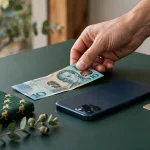
PayID identifies a bank account for transfers; it is not a wallet, and fast payment rails do not guarantee instant casino processing.

PayID is a way to identify where a bank transfer should go without relying on the recipient’s account number and BSB. You can link an identifier, such as your mobile number or email address, to an account with your bank. When someone sends money using that PayID, the identifier helps route the payment to the associated account.
The transfer itself runs through Australia’s New Payments Platform, or NPP. That platform connects participating banks and supports fast transfers between them. So PayID is not a separate bank account or a wallet holding your balance; it is an identifier used within a bank payment system. The money moves between bank accounts through the platform.
That distinction is easy to miss when you see a payment method described as “instant.” The word refers to the payment system’s ability to move funds quickly, not to every step on the other end of a transaction. PayID does not decide what a recipient does with money, check the recipient’s business claims, or set the rules of a website that displays its name. It handles payment routing.
If you’re looking for online pokies with PayID in Australia in 2026, use this list as a starting point and check each operator’s payment terms before you deposit.
DragonSlots Casino
DragonSlots Casino is listed with a Curacao Gaming Authority licence held by Jumpman Gaming Ltd.
Playfina Casino
Playfina Casino is listed as operating under a Curacao eGaming licence held by Hollycorn N.V. since 2017. Its minimum deposit is A$20–30, depending on the offer.
7Bit Casino
7Bit Casino is listed as operating under a Curacao licence, with Dama N.V. as its operator.
Roby Casino
Roby Casino is listed with a Curacao eGaming licence held by Roby Games Ltd.
SpinsUp
SpinsUp is listed with a Curacao Gaming Control Board OGL, number 2023/174/0082, and is operated by Dama N.V.
Neospin
Neospin is listed with a Curacao Gaming Control Board OGL, number 2023/176/0095, and is operated by Hollycorn N.V.
Ricky Casino
Ricky Casino lists PayID payouts at 1–3 business days and crypto payouts under 1 hour. The minimum deposit is A$20, or A$30 to qualify for the bonus.
Kingmaker
Kingmaker lists crypto payouts at about 90 minutes and fiat payouts at 1–5 days. Its minimum deposit is A$30.
SkyCrown
SkyCrown is listed with a Tobique Gaming Commission licence. Its listed payout times are about 10–15 minutes for crypto and 1–5 days for fiat, with a A$30 minimum deposit.
House of Pokies
House of Pokies lists PayID payouts at 1–24 hours and a A$30 minimum deposit, reduced to A$10 for PayID. Its source describes the licence as international iGaming but does not name the jurisdiction.
I used to treat a familiar payment logo as a kind of reassurance. It wasn’t. Recognising the method only tells you something about how a transfer might be addressed; it says nothing by itself about the person or organisation receiving it. A bank transfer rail and the service asking you to use it are separate things.
That matters particularly when a page describes itself as offering Australian pokies or real-money casino play through PayID. A payment method does not make the underlying service lawful. Under the Interactive Gambling Act 2001, operators are prohibited from providing real-money online casino games to people in Australia. That includes online poker, slots and table games. The law concerns the gambling service, not whether its payment instructions use PayID or another familiar method.
The payment label can make an online offer feel ordinary: you recognise the identifier, you know your bank uses it, and the transfer appears to fit a routine you already understand. But that familiarity can blur the difference between sending money through a bank system and having grounds to trust the recipient. They are not the same check.
PayID also does not transform a website into a bank or an intermediary that guarantees a transaction. The identifier points towards an account registered with a bank; the NPP helps banks pass payments between one another. Neither function establishes what a recipient is permitted to offer, whether a claim on a page is accurate, or what happens after funds reach the recipient.
Think of the process as two separate layers. First, there is the bank-payment layer: an identifier is associated with an account, and the NPP supports movement between banks. Then there is the service layer: a website may display payment instructions, but those instructions do not change the status of the service itself. Keeping those layers apart is more useful than focusing on a badge or a promise of convenience.
There is another subtle point in the name. A PayID is not necessarily your phone number or email address in every context; it is the identifier you have registered with your bank for payments. If you are considering any transfer, make sure you understand which account and recipient the payment details refer to. Don’t assume that a payment request is genuine just because it uses a type of identifier you recognise.
I find that a plain explanation is less persuasive than a bright “fast” label, but it is the one worth keeping in mind: PayID is an Australian payment system built around registered identifiers, and it uses the NPP to support transfers between banks. It can describe the route money takes. It cannot vouch for the destination.
That’s the distinction.
A PayID deposit can appear in an account within seconds. That speed is useful to understand, but it can also make a wrong payment feel final before you have time to reconsider it. PayID itself does not charge a transfer fee. A venue may set its own payment conditions, so read what it says about charges rather than assuming the payment method and the recipient have identical fee rules.
Legal Prohibition
Under the Interactive Gambling Act 2001, it is illegal for operators to provide real-money online casino games, including pokies, to people physically in Australia.
There is an important Australian legal context here: under the Interactive Gambling Act 2001, it is illegal for operators to provide real-money online casino games, including pokies, to people physically in Australia. A payment option does not change that.
When you send money using PayID, the transfer is authorised through your bank. Once it is confirmed, it cannot be reversed through PayID. That is the part I would keep in mind before pressing the final button. “Instant” describes the movement of money, not a grace period in which you can cancel a transfer you have changed your mind about.
Take a moment to compare the payment details on screen with the details you were given. Check the recipient and the amount before confirming, and do not rely on a familiar-looking label alone. A small slip in the recipient details can matter because a completed payment is not something you can simply pull back from the other side.
I used to treat a quick bank confirmation as proof that everything had gone exactly as intended. It only confirmed that the transfer had been sent. It did not make the transaction reversible, nor did it settle any disagreement about what the recipient should do next. Those are separate issues.
PayID uses an identifier, such as a mobile number or email address, to direct a payment. That makes it worth checking the identifier carefully rather than assuming the payment screen has filled in the right destination. If a recipient’s details change, pause and verify them through a channel you already trust. A message urging you to hurry is a reason to slow down, not a reason to skip the check.
Also make sure your PayID details match the details registered with your bank. If you are dealing with an account that asks for identity information, check that the bank account name matches the profile name before moving money. Mismatched details can create complications, particularly if the recipient later needs to identify who made a payment.
A deposit appearing quickly does not mean every part of an account transaction has been checked or resolved. It means the bank transfer has moved. Keep the confirmation for your own records, but do not mistake it for a promise about what the recipient will do with the funds.
PayID itself does not levy a transfer fee. Reputable venues do not add a separate PayID charge for deposits or withdrawals, but that does not mean every recipient has the same terms. Read the fee information shown by the receiving service and check whether its stated conditions apply to the transaction you are making. If a charge is unclear, do not assume it is part of PayID’s own pricing.
The distinction is simple: the payment rail and the business receiving the money are not the same thing. PayID can move a payment quickly, but it does not certify the recipient, guarantee how a payment will be handled, or resolve a dispute on your behalf. The speed of the transfer is not a quality check.
That is why I would not use “fast” as a reason to send money. It is a description of timing, not reassurance. Before confirming, check the destination, the amount, the names involved and the recipient’s stated conditions. If anything does not line up, stop and clarify it first. Once confirmed, the transfer cannot be taken back through PayID.
When I see a site described as the “best” PayID option, I try to translate that into the questions the label skips: what does PayID availability actually establish, who is operating the service, and what happens when a customer asks for a payout? The payment method answers only a narrow part of that. It does not certify the business behind it.
That distinction matters in Australia. Under the Interactive Gambling Act 2001, providing real-money online casino games, including pokies, to people physically located in Australia is illegal for operators. A payment option displayed on a cashier page does not change that legal position. Nor does an offshore licence turn the service into an Australian-authorised online casino. I would not treat a “best” badge, a polished page or a familiar payment logo as evidence that a real-money casino service is lawful here.
PayID is a way to move money using an identifier connected to a bank account. Its presence may tell you that a site claims to accept that payment method; it tells you nothing by itself about the operator’s authority, conduct or willingness to pay. It cannot establish that games are fair, that terms are transparent, or that a withdrawal will be processed as promised.
I learned this the expensive way with online claims generally: one true detail can make the rest sound more credible than it is. A payment logo can be accurate while the important questions remain unanswered. “Trusted” is a sales word, not a regulator’s finding.
If a page presents an operator as licensed, check the claim independently against the public register of the named licensing authority. Confirm that the licence belongs to the operator named in the site’s terms, not merely to a similarly named business, and that the public record is current. Then look at what the licence authorises. An overseas licence is not an Australian licence and does not make supplying prohibited online casino games to people in Australia lawful. If the claim cannot be verified in a public record, it is not a basis for trust.
PayID’s role in moving money should not be confused with a casino’s payout process. Withdrawal processing can vary by venue; a payment method cannot set or guarantee how quickly an operator reviews and releases a request. A specialist review has reported different processing speeds between casinos, but that observation should not be read as a dependable promise for any particular operator or future transaction.
I would be wary of a claim that turns a payment method into a guarantee: “instant” can describe a transfer feature, not every step a customer may face. Read any stated payout conditions as claims made by the operator, not as proof that the operator is reliable. Look for clear rules and a way to verify who is responsible for the service. If the wording is vague, or the company named in the terms does not match the licensing claim, that is a reason to stop and investigate rather than fill in the gaps with optimism.
Even an independently verifiable licence has a limited meaning: it confirms a record and its stated scope, not every marketing promise. And in Australia, an offshore authorisation does not override the prohibition on providing real-money online casino games to people here. That point gets lost when pages talk as if “licensed” were a single universal status.
A list of PayID pokies may look like a shortcut, but ordering names from first to last does not show how that order was decided. A site may rank operators for commercial reasons, and a payment label may be included simply because it attracts attention. I do not read a ranking as independent verification unless it explains its method and gives evidence that can be checked outside the page itself.
The same goes for testimonials and payout screenshots. They may describe an individual experience, but they do not establish a general record or prove that a service is authorised. A confident tone is not evidence.
So when you encounter a “best PayID” claim, reduce it to verifiable parts: the identity of the operator, the public record behind any licence claim, and the exact scope of that record. Do not treat PayID access as a recommendation, a safety mark or a promise of payment. In this market, that separation is not pedantry. It is the part worth checking.
Before creating an account, look for PayID on the site’s cashier page. Don’t rely on a banner, a social post or a general claim that the site supports it. Payment options can differ between venues, and the cashier is where the site should set out what it currently accepts. If PayID is not displayed there, treat the claim as unconfirmed rather than signing up in the hope that the option will appear later.
Check the deposit minimum shown beside PayID, too. It is a site condition, not a standard set by PayID, so don’t assume one venue’s amount applies elsewhere. Specialist casino reviews report that many operators set minimum deposits in the AU$10–AU$20 range, but the cashier’s own terms are the practical detail to confirm before you make any decision. Read any stated maximum or other transaction conditions there as well; don’t infer them from a general payment description.
There is a more important check for Australian readers. A PayID option does not establish that a real-money pokies service is lawful, licensed for Australian customers, fair or reliable about payouts. Under the Interactive Gambling Act 2001, operators cannot provide real-money online casino games to people physically in Australia. So a site displaying PayID should not be treated as an endorsement or as evidence that the service is authorised here. “Licensed” in a site’s marketing is not proof of an Australian licence.
If you are checking a site’s claims, look for the operator’s identity and the licence details it publishes, then verify those details through the relevant public regulator’s records. Do not let a payment logo substitute for that check. If the operator’s identity or claimed authority cannot be independently confirmed, stop there.
I used to treat a familiar payment button as a reassuring sign. It only tells you what payment method a site says it offers. It says nothing about the legal status of the service or whether a payment will be handled as advertised.
Keep the check simple: PayID actually listed in the cashier; the deposit minimum clearly stated; operator and licence claims independently verifiable. If any of those details are missing or muddy, don’t hand over personal or banking information. A polished page is still just a page.
A PayID transfer can be stopped by the bank before it reaches its destination. Two separate checks matter here: the limit on your account and the bank’s decision about the recipient. Neither is set by the payment name shown on a cashier page.
A specialist review reports that your bank sets the daily PayID transfer limit. The amount available to send can therefore depend on your account settings and the bank’s rules, rather than on what a gambling site says it can accept. If a transfer is declined, check your bank’s PayID limit and any message in the banking app before trying again. Repeating the payment without understanding the decline can create confusion about whether a transfer is pending or has failed.
There is another possible interruption. A specialist review also reports that some Australian banks, including members of the Big Four, occasionally block PayID payments to gambling merchants they identify as such, under their acceptable use policies. That is a report about bank practices, not a guarantee that every bank blocks these payments or that a particular transfer will go through. Policies and controls can change, and the bank is the place to confirm what applies to your account.
I would not treat a blocked payment as a prompt to find a workaround. A payment method being displayed somewhere does not mean the bank will process a transfer, and it does not establish that the recipient is legitimate. In Australia, the Interactive Gambling Act 2001 prohibits operators from providing real-money online casino games to people physically in the country. A PayID label does not change that legal position.
If a payment is refused, pause rather than sending it through a different route or to details supplied in a message. Contact your bank through its official channels if you need to understand the refusal. Keep the recipient details and any bank notification to hand, but do not share security codes or approve a transaction you did not initiate.
The daily cap is bank-set; the merchant decision is separate. That distinction is easy to miss when a payment screen makes the process look like one simple step. I’ve learned not to read “PayID available” as “the bank will allow it.” Check the bank’s own guidance, and don’t assume that a failed transfer can be solved by trying again.
A PayID withdrawal has two separate stages: the casino reviews and releases the request, then the payment travels to your bank account. Seeing “approved” in an account history does not necessarily mean the money has arrived. I used to treat those labels as interchangeable. They aren’t.
The casino’s internal check can hold up the first stage. KYC status matters: if identity checks are incomplete or need another look, the venue may not approve the payout yet. Its own processing also affects how long the review takes. Make sure the name on your bank account matches the name on your casino profile; a mismatch can create another obstacle.
A specialist review reports that some casino-initiated PayID withdrawals can remain pending for 24–72 hours before funds are sent. That is a described possibility, not a timetable every venue follows. The same kind of review puts the bank-transfer stage at 12–24 hours after approval and describes a request-to-receipt window of 2–4 days when the internal wait is included. Treat those figures as reported estimates, not a promise for your transaction.
Once the venue releases the payment, PayID’s fast bank-to-bank transfer system may make the remaining leg quicker than the casino’s review. But “instant” describes the payment rail, not the time spent waiting for a withdrawal to be checked. If your request is still pending, the delay is on the venue’s side; if it is marked as sent, check the transaction status and your bank account before assuming it has failed. Keep the request confirmation and any status updates.
One more thing I learned the hard way: a payment method does not tell you whether a gambling service is lawful or reliable. Australian law prohibits operators from providing real-money online casino games to people in Australia. Payment instructions are not an endorsement or a reason to use such a service.
So if you see a claim about PayID withdrawals at pokies sites, read it as a description of a payment process, not a guarantee of a payout date. Separate the review, release and bank arrival in your head. Less guesswork.
A PayID logo or a line in a payment FAQ is only a claim. If you are checking whether a site actually lists PayID, look at the cashier page itself and see whether it appears as a deposit option before you create an account. A page can be out of date, and a payment method mentioned in promotional copy may not be available at checkout.
That check does not make the service lawful or trustworthy. Under Australia’s Interactive Gambling Act 2001, providing real-money online casino games, including pokies, to people in Australia is illegal. PayID availability is a payment detail, not evidence that an operator can legally serve you or will handle funds reliably. I treat the two things separately.
Minimum deposits are another detail worth checking in the cashier terms, rather than assuming every site sets the same threshold. A specialist review describes PayID minimums at some sites as falling between A$10 and A$30, but that is not a promise about any particular operator. The amount shown at checkout is the relevant one, and terms can change.
If a payment screen asks you to use PayID, make sure the details you enter match the PayID registered with your bank. A mismatch can complicate a transaction. Don’t send money based only on instructions in a message or a page that does not match the site’s own cashier information.
Attention: A familiar payment logo only indicates what method a site claims to support; it does not prove the service is legal or that payouts are guaranteed.
I’ve learned not to treat a familiar payment logo as a recommendation. It tells you, at most, what payment method a site claims to support—not whether you should use it.
“Free credit” sounds like money you can simply use and keep. I’ve learned to read past that label. A bonus may come with a wagering requirement: you have to meet the stated play-through condition before the credit, or any winnings linked to it, can be withdrawn. The headline is the easy part. The terms decide what the offer actually means.
A specialist review reports wagering requirements of 30x–45x the bonus amount as common in the offers it examined. That is a reported range, not a rule for every promotion. Check the specific terms rather than assuming the same condition applies everywhere. In particular, find out what amount the multiplier applies to and what conditions govern the credit and any resulting winnings. If those details are hard to find, I would not treat “free” as a useful description.
PayID does not change those conditions. Seeing a PayID reference beside a credit offer does not tell you whether the offer is available, what its rules are, or whether a service is lawful. A payment method and a promotion are separate claims.
There is also a legal point that is easy to miss in Australia: under the Interactive Gambling Act 2001, operators cannot provide real-money online casino games, including pokies, to people physically located here. A bonus label does not change that status. I wouldn’t read a credit claim as an invitation or assurance that an offer can lawfully be used.
My own mistake was stopping at the big word and skipping the small print. Don’t do that. If the wagering condition is unclear, the sensible move is to leave the claim alone, not guess how it works.
A Facebook post saying a pokies site takes PayID is just a claim on a screen. It does not prove that the payment option is available when you reach the cashier, and it says nothing about whether the operator is licensed. I’ve learned not to confuse a confident-looking post with something independently verified.
There’s a bigger issue in Australia than whether a payment button appears. Under the Interactive Gambling Act 2001, providing real-money online casino games, including pokies, to people in Australia is illegal for operators. Casino-style services are prohibited here, and advertising them to Australian audiences is also banned. A social post cannot change that legal position.
PayID itself is a payment system, not a stamp of approval for a gambling service. Seeing its name beside an operator’s offer does not establish that the operator is authorised, that the payment route works, or that any winnings would be paid. Separate those claims; they are not the same thing.
If a post urges you to act quickly, sends you elsewhere, or shows a payment option as proof of trust, pause before sharing bank details or transferring money. Don’t treat likes, comments or a polished image as evidence. I’ve been too quick to believe the presentation before; it’s an easy mistake to make.
A Facebook mention is not verification. And it does not turn a prohibited service into a lawful one.
When people look for PayID and pokies together, they are often trying to understand a simple thing: what role the payment method plays. PayID is a way to move money using an identifier linked to a bank account, such as a mobile number or email address. It is not a gambling service, a game, or a sign that a particular operator is authorised to serve people in Australia.
That distinction matters. A payment method can be available in many kinds of settings, but its presence does not tell you whether the business receiving money is lawful, dependable or willing to pay out. I used to treat a familiar payment logo as a kind of reassurance. It isn’t. A logo describes a payment route, not the character of the recipient.
PayID can be used for both deposits and withdrawals, so money may move in either direction. The transfer method does not decide whether a casino will approve a withdrawal, how it will handle a customer account, or whether a gambling service may legally be offered to Australians. Those are separate issues, and blending them together is how a payment feature starts to sound like an endorsement.
There is an important legal boundary here. Under the Interactive Gambling Act 2001, providing real-money online casino games to people in Australia is prohibited. That includes pokies and other casino-style games. PayID does not change that rule, make an offshore casino locally authorised, or turn a prohibited service into a permitted one. Nor does a payment method establish that a venue’s claims about its licence or payouts are true.
So if a page presents “PayID pokies” as though the payment option itself settles the important questions, read that claim for what it is: a description of a transfer method, not proof of lawful access or trustworthiness. I have learned to separate the two. Payment convenience can be real; the conclusions wrapped around it may not be.
It is also worth keeping the wording straight. “Online pokies with PayID” describes a supposed combination of a gambling service and a payment route. It does not mean PayID supplies the games or oversees the operator. PayID is part of the payment side only. The games, the account terms, and the operator’s conduct are not assessed by that label.
If you are simply trying to understand what PayID does, think of it as a bank-linked way to send and receive money using an identifier instead of entering standard account details for every transfer. That is the payment-system function. It can make a transfer move quickly, but it cannot verify the purpose of a website for you or make its promises reliable.
This is where search phrases can blur separate questions. Someone asking about PayID and Australian pokies may want to know whether PayID can transfer funds, whether a site claims to accept it, or whether that site is legitimate. Those are not interchangeable. A claim about acceptance answers only the narrow payment question, and even then it should be checked directly rather than inferred from a promotional post or an old page.
I would not treat “fast” as a verdict either. Speed says something about the movement of money, not the status of the service receiving it. The same goes for a polished cashier page or a familiar payment name. Those details can look reassuring while leaving the central issue untouched.
Keep the categories separate: PayID is a payment method; a gambling operator is a separate service; and the law determines whether real-money online casino games may be provided to people in Australia. Confusing one for another is an easy mistake. A payment label is not permission.
Some sites advertise PayID for deposits, but that does not make real-money online casino games lawful to provide to people in Australia. PayID is only a payment method; it does not verify or endorse the recipient.
If you are considering a transfer, check the recipient identifier and amount against details verified through a trusted channel, then authorise it through your bank. Confirmed PayID transfers cannot be reversed, and using PayID does not change the legal status of online casino games in Australia.
PayID can move money between participating banks quickly, and deposits may arrive within seconds. That speed does not guarantee the recipient is trustworthy or make a completed transfer reversible.
Your bank sets your daily PayID transfer limit. Check with your bank for the limit that applies to your account.
A PayID logo or payment request does not show that a website is trustworthy or that its service is lawful. Verify the recipient through a channel you already trust, and remember that real-money online casino games are prohibited from being provided to people in Australia.
Typical minimum deposits are A$10–A$20, though some operators accept as little as A$5. Check the deposit terms before making any transfer.