The phrase “pay by phone” can refer to different payment methods, so check how deposits, bonus terms and withdrawals actually work.
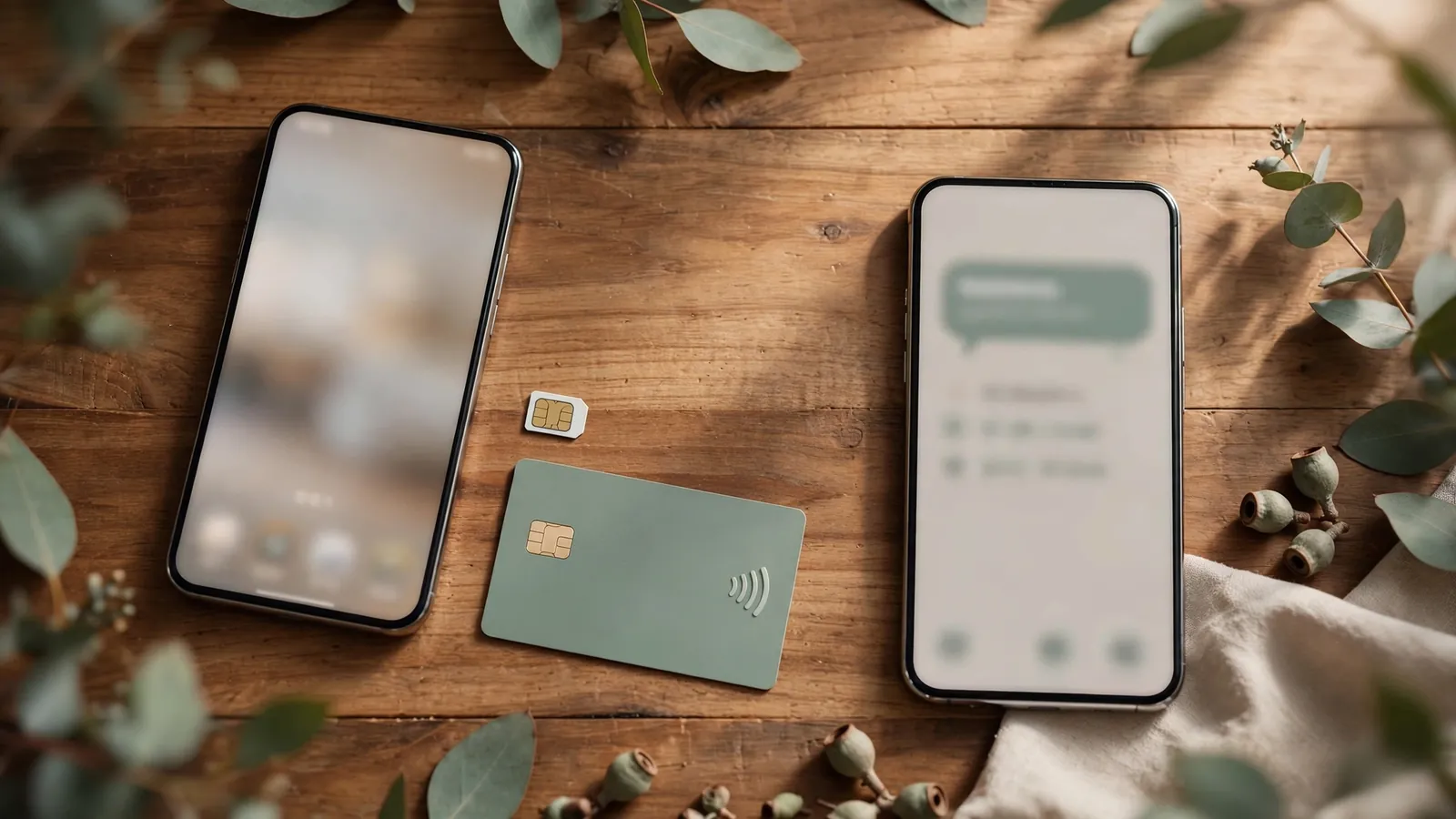
I used to see “pay by phone” and assume the charge would turn up on my next mobile bill. That sounds straightforward, but it can describe two different things. A payment might be charged through a phone carrier, or it might be a bank payment that uses a mobile number as an identifier. Those are not interchangeable.
PayID is the second kind. It is a payment service that operates through Australia’s New Payments Platform (NPP). A user can send or receive money using an identifier such as a mobile number or email address, with the payment connected to a bank account. The number helps identify where the money is going; it does not turn the transaction into phone credit or add it to a carrier bill.
That small distinction matters. Seeing your mobile number mentioned in a payment description does not mean your phone provider is handling the payment. With PayID, the relevant account is your bank account. A phone-bill payment, by contrast, would mean the carrier is involved in charging the amount to the customer’s mobile account. The fact that both methods can involve a phone number is just a source of confusion.
Think of a PayID mobile number as an address for a bank payment. It can help direct money to the intended recipient, much as an email address can. The money still moves through the banking system. PayID is part of the NPP, the Australian real-time payment infrastructure, rather than a service that collects charges through a phone company.
This is where wording like “mobile payment” gets slippery. It may mean you are using a mobile device to access a banking app. It may mean a mobile number is being used as a PayID. Or it may mean the charge is billed by a carrier. Only the last of those describes a phone-bill payment.
I have learned not to treat the device in my hand as proof of the payment method. Paying from a phone does not make something a phone-bill transaction, just as using a laptop does not make it a computer-company payment. The device is how you access the service; it does not tell you which account is charged.
If you are trying to work out whether an online service accepts a payment charged to your mobile account, look for explicit wording about carrier billing and check what account would actually be charged before proceeding. “Pay by phone” on its own is too vague to settle that. It could refer to a payment initiated on a phone, not a charge placed on a phone bill.
Likewise, a reference to PayID and a mobile number does not establish that phone-bill billing is available. It tells you that a mobile number can act as a payment identifier. The transaction remains a bank payment. That distinction is easy to miss when a page uses “mobile” as shorthand for several different things.
The same goes for searches about playing mobile games or using mobile pokies. A game being viewable on a phone says nothing about how a payment is processed. The screen, the game and the payment rail are separate matters. A mobile-friendly page does not demonstrate that its payment option uses carrier billing, and a phone number appearing in payment information does not demonstrate it either.
I would also be wary of language that makes these methods sound like one convenient bundle. “Mobile,” “instant” and “phone payment” can be used loosely in advertising. The useful question is more basic: does the payment come from a bank account, or is the amount added to a phone account? If the wording does not answer that clearly, don’t fill in the gap yourself.
For Australian readers, the phrase “pay by phone bill” should not be treated as another name for PayID. PayID’s connection to a mobile number is about identifying a bank payment, not charging a carrier account. Nor does the phrase “online casino pay by phone” prove that a particular service accepts either method. A label is not confirmation of the payment route.
Attention: Do not treat the phrase "pay by phone bill" as another name for PayID, as the latter is a bank payment and not a carrier charge.
That matters especially when a page mixes references to mobile play, PayID and phone-bill payments. Those terms can sit close together while describing different things. Keep them separate: playing on a phone concerns the device; PayID concerns a bank payment addressed through an identifier; phone-bill billing concerns a charge handled through a mobile carrier.
No guesswork needed. Check the payment wording and the account that would be charged before making any decision. If the explanation only says “mobile payment,” it has not told you enough to know that your phone bill will be used.
A PayID deposit is initiated through a banking app. In a payment flow, the customer selects PayID, enters an amount, then confirms the transfer in their bank’s app. That describes the mechanics; it is not a recommendation to fund online casino gambling. Real-money online casino games are prohibited when provided to people in Australia.
If you come across a payment request presented as a casino deposit, pause before opening your banking app. The name shown as the PayID recipient matters: check it against the details supplied for the transaction before confirming anything. If the recipient information does not match what you were given, don’t send the payment. A bank transfer is real money moving out of your account, not a test click you can casually undo.
The amount field is another point where assumptions can trip you up. A payment page may display a minimum, but that figure is set by the particular service and can differ from one payment route to another. PayID deposits commonly begin in the AUD 10–20 range. Some services accept as little as AUD 5 through bank transfer, but that does not mean the same minimum applies to PayID. Read the amount shown for the exact method rather than relying on a figure remembered from another page.
There is a distinction between a minimum displayed by a service and a limit set by your bank. Those are separate checks: a payment could fall within the service’s stated range yet still run into a bank limit. PayID transaction limits are set by each bank and vary, so the banking app is where you can see whether a transfer is allowed. Don’t increase an amount just to make a payment fit a suggested threshold.
Then comes the reference field. This is easy to treat as optional admin, but it can decide whether a payment is matched automatically. A service may ask for your player ID or username in the PayID reference. If that identifier is missing or entered incorrectly, the deposit may not be credited automatically; it could sit pending while support staff handle it manually.
That makes the reference worth checking twice before confirming. Copy the requested ID carefully, and use the payment reference for the identifier the service specifically asks for. Don’t replace it with a personal note or leave the field blank because the bank app appears to allow that. A transfer can reach the recipient while still being difficult to match to the right account.
PayID Deposit Process
Selection
Select PayID in the payment interface and enter the deposit amount.
Details
Note the recipient details and the required reference, such as a player ID or username.
Confirmation
Review and confirm the transfer within your banking app to authorise the funds to leave your account.
The sequence, in plain terms, is: select PayID in the payment interface, enter an amount, note the recipient details and required reference, then review and confirm in the banking app. The bank app’s confirmation is the point at which you authorise money to leave your account. If any detail is unclear, stop rather than guessing. A payment page and a bank confirmation screen are separate parts of the process, and the information should line up before you approve the transfer.
I’ve learned not to read a familiar payment logo as proof that every part of a transaction is straightforward. The amount, recipient and reference each do a different job. The recipient tells you where the money is going; the reference helps the service identify whose payment it is; the amount determines how much you authorise. Miss one detail and a quick-looking transfer can become a support issue.
If the payment is pending, avoid sending another transfer just to see whether it works. First check the transaction status in the banking app and whether the reference was entered as requested. Duplicate payments can create a separate problem rather than fixing the first one. Keep the confirmation details available if you need to ask the bank or payment service what happened.
One last distinction: the banking app confirms the transfer, but that does not itself confirm how or when a separate service will record it. A correctly entered payment reference helps with matching; it is not a promise about the service’s account-crediting process. Slow down at the confirmation screen. Small details matter.
If you’re looking at pay-by-phone casino options in Australia for 2026, use this list as a starting point and check the payment methods available to you before depositing.
DragonSlots Casino
You can note DragonSlots Casino’s stated licensing detail: Curacao Gaming Authority, with Jumpman Gaming Ltd.
Playfina Casino
You can factor in Playfina Casino’s stated minimum deposit of A$20–30, which depends on the offer. It is listed as operating under a Curacao eGaming licence held by Hollycorn N.V. since 2017.
7Bit Casino
You can note that 7Bit Casino is operated by Dama N.V. and is listed as licensed in Curacao.
Roby Casino
You can note Roby Casino’s stated Curacao eGaming licence, held by Roby Games Ltd.
SpinsUp
You can note SpinsUp’s stated Curacao Gaming Control Board licence, OGL/2023/174/0082, and operator, Dama N.V.
Neospin
You can note Neospin’s stated Curacao Gaming Control Board licence, OGL/2023/176/0095, and operator, Hollycorn N.V.
Ricky Casino
You can consider Ricky Casino’s stated minimum deposit of A$20, or A$30 to qualify for the bonus. Its listed payout times are under an hour for crypto and 1–3 business days for PayID.
Kingmaker
You can note Kingmaker’s stated minimum deposit of A$30. Listed payout times are about 90 minutes for crypto and 1–5 days for fiat.
SkyCrown
You can note SkyCrown’s stated Tobique Gaming Commission licence and A$30 minimum deposit. Its listed payout times are about 10–15 minutes for crypto and 1–5 days for fiat.
House of Pokies
You can deposit with PayID from A$10; the stated minimum deposit is A$30. PayID payouts are listed as taking 1–24 hours, and the source does not name the jurisdiction of its international iGaming licence.
“Pay by phone” sounds straightforward, but it can describe two very different things. One is a payment you start on your phone through your bank. The other is a charge placed on your mobile account or phone bill. They are not interchangeable, and the label alone doesn’t tell you which one is meant.
For Australians, the payment detail that can be described clearly is PayID: you use your banking app to initiate a payment through the New Payments Platform (NPP). That is a bank payment made on a phone, not evidence that the cost will appear on your telco bill. The fact that a mobile number can be used as a PayID identifier can make the wording even more confusing; it does not turn the transfer into carrier billing.
That distinction matters because a page or advert using “pay by phone” may leave the actual payment method unclear. I’ve learned not to treat a familiar phrase as a payment guarantee. If you see it used to describe a gambling service, don’t assume it means a phone-bill deposit, or that the service can accept one. The wording needs to be read alongside the payment details—and the legal context.
With PayID, the payment starts in your bank’s app. Once released, the transfer travels through the NPP, which is designed for real-time payments. A PayID transfer can clear within minutes; casino pages may describe deposits arriving within seconds. Those timings refer to the payment moving through the banking system, not necessarily the moment an account balance changes.
While PayID transfers move through the NPP in real-time, a casino may still need additional time to identify and credit the transfer to your account.
There can be a separate step on the recipient’s side. A casino may need to identify and credit the incoming transfer before it appears in an account. So “real-time” does not mean that every part of the process is automatic or instantaneous. The payment rail can be quick while account crediting still takes additional time.
That is the practical difference between “I paid on my phone” and “my phone bill was charged.” The first describes the device used to open a banking app. The second describes who collects the money and how it is billed. Those are separate arrangements.
There is another issue beyond payment terminology. Under Australia’s Interactive Gambling Act 2001, operators cannot provide real-money online casino games, including slots, poker and table games, to people physically located in Australia. A payment label does not change that rule. Nor does a page calling itself a pay-by-phone casino establish that its service is lawful to provide in Australia.
So I would not treat a list described as “top” or “new” pay-by-phone casinos as proof of a particular payment option or a safe route to play. A label can blur together a mobile banking transfer, a phone-bill charge and a gambling service. They are not the same claim.
If your question is whether you can use your phone to make a PayID transfer, that describes a banking action. If you mean whether an online casino can bill gambling spend to your mobile account, that is a different claim—and the phrase alone does not verify it. Keep the distinction clear. No magic shortcut.
“Best” sounds like a verdict. Often it is just a label attached to a payment method without asking whether it fits your bank limits or the way you manage money. I’d start with those practical details, not a list of supposedly superior casinos.
With PayID, your bank sets the transaction limits, and they differ between banks. Across most major Australian banks, the stated range is AUD 1,000 to AUD 5,000 for a single transaction, while daily limits range from AUD 10,000 to AUD 20,000. Treat those as broad bank ranges, not a promise about what your own account can send. Your bank’s settings are the ones that matter.
That distinction is easy to miss. A figure you see described as a limit may be the bank’s ceiling, not a sensible amount to spend, and it does not tell you what a particular payment page will accept. Before relying on any displayed maximum, check your own banking app or ask your bank what applies to your account. Don’t mistake a large available limit for a recommendation.
I’ve learned not to let a headline number do the thinking for me. A payment option is only a fit if its limits match the amount you intend to move and the controls you want to keep. If you prefer a lower personal ceiling, look at what you can set or manage through your bank rather than assuming the method’s maximum is the right target. Keep your own spending boundary separate from the provider’s transaction limit.
The other thing I’d check is what “pay by phone” actually describes. A payment started on a mobile device is not automatically a charge to your mobile account. A familiar label is not a safeguard.
Nor does a payment method establish that a casino or a particular pokies title is available to Australians. Real-money online casino games, including slots, are prohibited services for operators to provide to people in Australia under the Interactive Gambling Act 2001. So a ranked recommendation for Australian casino sites would give the wrong impression. No ranking solves that.
If you encounter a “best” claim, narrow it down: best by what measure, and for whose limits? A useful comparison should explain the payment route and make its conditions clear, rather than leaning on a superlative. Then check the bank’s own limit information and decide whether the method fits your budget. That’s less exciting. Better than guessing.
“No wagering” sounds wonderfully clean. I’ve learned to treat it as a label, not a full explanation. Before accepting any casino promotion, read the conditions attached to it and work out what the offer actually permits. The phrase alone does not establish that a bonus is available, that it can be claimed from Australia, or that it has no restrictions.
The same goes for a “no-deposit bonus”. The words suggest value without a deposit, but they do not tell you whether winnings can be withdrawn, which games count, or what other conditions apply. I wouldn’t treat a headline as the terms. If the details are hard to find, that is a reason to pause, not a reason to guess.
Check the wagering requirement first. If it applies, find out exactly what must be wagered and whether the promotion sets a maximum bet while it is active. Then look at game weighting: different games may count differently toward a requirement, so a bonus that appears straightforward can be less useful than it sounds. No mystery there. Just small print.
Time limits matter too. Check when the promotion expires and whether the wagering requirement must be completed within that period. Finally, look for a maximum cash-out condition. A bonus may allow you to play with promotional value but still cap what can be withdrawn from it. That distinction is easy to miss when you’re focused on the headline.
Searches that combine phone payments with “no wagering” or “no deposit” do not prove that a particular payment method is accepted, or that an offer exists. Payment wording and bonus wording are separate claims. Read the actual terms rather than joining them together in your head.
There is also a bigger Australia-specific point: real-money online casino games, including pokies, are prohibited for operators to provide to people physically in Australia under the Interactive Gambling Act 2001. So a promotion aimed at casino play should not be treated as an invitation or recommendation just because it appears online.
If you are assessing terms in a setting where they apply, save or note the full conditions before opting in. I’ve made the mistake of remembering the banner and not the restrictions. That gets expensive in its own way. A specialist review also notes that identity checks may be required before a first withdrawal; completing KYC verification early can help avoid paperwork delays if a withdrawal is permitted. Don’t assume that a promotional balance removes those checks.
Legal Restriction
Under the Interactive Gambling Act 2001, it is prohibited for operators to provide real-money online casino games to people physically located in Australia.
The useful question isn’t whether the offer sounds “free” or “no wagering”. It’s what the written conditions say about wagering, maximum bets, eligible games, time limits and cash-out caps—and whether the offer is relevant to you at all. No headline beats the terms.
“Not on BetStop” and “pay by phone bill” are separate claims, not proof of each other. A site can put both phrases on a page without showing that a phone carrier will bill a deposit or that the stated BetStop status is accurate. I would not treat either as established just because it appears beside promises about real-money pokies, bingo or a no-deposit offer.
The wording can also blur different payment routes. Paying through a banking app on a phone is not the same as adding a gambling charge to your mobile account. Nor does mentioning a billing provider prove that a particular casino accepts its service. A proper claim should identify the payment method and explain its conditions, rather than rely on a vague “pay by phone” label.
BetStop wording needs the same care. A claim that a site is included, excluded or “not on” a register should be supported by a current, attributable record. A promotional badge or an unexplained line in an advert is not enough for me to rely on. Don’t infer status from the payment options, the games offered or the way a site describes itself.
There is a more basic issue for people in Australia: real-money online casino games, including pokies, bingo-style casino play and other casino games, are prohibited services when supplied to people in the country. The Interactive Gambling Act 2001 places the restriction on operators providing them to Australians. A phone-bill label or a BetStop claim does not change that.
“No deposit” is another phrase that can distract from what matters. It does not establish that a real-money casino service is lawful, nor does it verify a payment route or a BetStop claim. I would avoid treating a headline offer as evidence about any of those things.
Withdrawal readiness is a different question from how a deposit is described. A specialist review reports that operators commonly ask for KYC verification before a first withdrawal. Getting the requested identity documents ready early may reduce the chance of paperwork holding up a request, but it does not verify a site’s other claims or guarantee a payout time.
I used to treat a neat badge as if someone had checked it for me. That was wishful thinking. For any claim about billing or BetStop, look for clear, current evidence that identifies what is being claimed and who confirms it. If the wording stays vague, don’t fill in the gaps yourself.
A game title or bonus banner can make a payment page look like the main event. It isn’t. If you’re trying to work out whether a phone-related deposit option will also get winnings back to you, check the withdrawal rules separately. A deposit method and a payout method are not automatically the same thing.
Note: A fast deposit does not promise a fast payout, as operators may perform their own withdrawal reviews and KYC verification.
Some specialist reviews report that operators may ask for a withdrawal to go back through the deposit method, where that is possible. Treat that as a policy to verify with the operator, not a rule that applies everywhere. PayID cashouts may not be available, so check what alternatives are stated before treating a deposit route as a complete way to move money in and out.
I learned not to assume the payment rail is the whole story. A specialist review notes that an operator’s own withdrawal checks can be a source of delay, even where the payment network itself can process a transfer quickly. In other words, a fast deposit doesn’t promise a fast payout. The operator still has to review the request.
KYC verification is commonly required before a first withdrawal. Getting those checks done before requesting a payout can help avoid a last-minute document scramble. Also read the withdrawal instructions carefully: they may specify which account details are needed and whether the original payment method can be used.
A “pay by phone” label attached to pokies or a bonus does not establish how winnings are paid. Nor does a bonus make a payout method available. Keep those claims separate: game and offer information on one side, withdrawal rules on the other. I’d rather find an inconvenient restriction before depositing than discover it when I’m trying to cash out.
One important boundary: real-money online casino games, including pokies, are prohibited for operators to provide to people in Australia. This isn’t a recommendation to use an offshore casino. If you encounter claims about phone deposits, bonuses or payouts, don’t read them as proof that the service is lawful or that its withdrawal arrangements will work as advertised.
Check the exit before the entrance.
A payment option that works from your Australian banking app does not automatically work with an overseas gambling site. PayID is an Australian payment service operating through the New Payments Platform (NPP), where transactions settle in real time. That tells you how the payment rail works; it does not establish that a casino outside Australia accepts PayID, or that its payment page will recognise an Australian account.
The same goes for searches for mobile slots or paying from a phone. Using a phone to open a banking app is not the same as paying through a mobile carrier, and neither tells you whether a foreign gambling service can lawfully offer online casino games to someone in Australia. The device is beside the point.
I used to treat a familiar payment logo as a quiet sign that a site was suitable for me. It isn’t. A payment method’s presence on a page is not a licence, a guarantee of access, or proof that a transfer will be handled as expected. “International” sounds reassuring; it answers very little.
There is a more important boundary here: under Australia’s Interactive Gambling Act 2001, operators cannot provide real-money online casino games, including slots, to people physically located in Australia. That applies whether the site describes itself as Australian, overseas, or based in Curaçao. Foreign branding does not change where you are.
PayID is an Australian service operating through the New Payments Platform (NPP); its presence on a page does not guarantee that an overseas casino can lawfully offer services to Australians.
So don’t read PayID’s real-time settlement as a passport for gambling payments across borders. It describes how PayID transactions move through the NPP, not which overseas services support them or whether they may offer casino play to Australians. A search result or payment symbol cannot settle those questions for you.
Keep the distinction plain: Australian payment infrastructure is not the same thing as an Australian-authorised online casino service. No logo changes that.
I used to treat “pay by phone” as one neat category. It isn’t. Phone credit and a credit card are different payment sources, even if both involve a phone somewhere in the process.
Phone credit means value attached to a mobile account, or a charge added to a carrier bill. A credit card is a borrowing facility issued by a card provider. Tapping a card in a banking app on your phone does not turn that card payment into phone-bill billing. The device is just how you access the payment.
That distinction matters in Australia. Credit card payments cannot be accepted for online gambling services here. So a page suggesting that you can fund an Australian online casino with Visa or Mastercard is not describing a permitted local payment route. Don’t let a mobile-friendly checkout blur the difference.
Searches about paying with phone credit, including services associated with carrier billing, can lead to offers aimed at other countries. A reference to Europe or Ireland does not tell you what applies in Australia, and a service name in a payment menu would not change the local restriction. I wouldn’t assume that a method available elsewhere is available—or lawful for an operator to offer—to someone in Australia.
There is another wrinkle: payment logos don’t tell you the full story. A specialist review has described Visa and Mastercard as commonly used for deposits in some casino contexts, while noting that card withdrawals may be slower or unavailable depending on the processor. That is not a green light for Australian online gambling; it does not override the local rule. Nor does it prove that a particular card route works for any particular operator.
Keep the categories separate: carrier billing charges a mobile account, a credit card draws on credit, and a payment made through a phone can still be a bank transaction. Similar screens, different mechanisms. In Australia, the credit-card route for online gambling is off the table.
“Free” can sound like money you can simply collect. I’d treat it as a label, not a promise. A spin or credit offer may come with wagering conditions before any winnings can be withdrawn, and a cash-out cap may limit what you can take away. The number displayed beside an offer doesn’t tell you those details.
Before accepting anything, look for the terms that explain whether winnings must be played through, which games count, and whether there is a maximum cash-out. Check for an expiry or other time limit, too. If the conditions are hard to find or unclear, don’t assume the advertised value is withdrawable.
That matters whether the offer is described as free spins, bonus credit or something connected to paying by phone. The wording alone does not confirm that a promotion exists, that it is available to you, or that it can be claimed through a particular payment method. Don’t provide payment details or make a deposit on the strength of a headline.
There is also a more basic issue for readers in Australia: real-money online casino games, including pokies, are prohibited services under the Interactive Gambling Act 2001 when offered to people in the country. A “free” label doesn’t change that.
Read the fine print. If the cash-out rules or wagering conditions don’t make sense, the safest move is to leave the offer alone.
PayID sends money from your bank account, so check that the recipient details match the payment instructions before confirming. If they do not match, do not send the payment.
After the casino approves a PayID withdrawal, the transfer may arrive within minutes to hours. Reviews can take longer; verified accounts at top-rated PayID casinos are typically reviewed within 2–6 hours.
PayID is a bank payment, not a phone-bill charge. Before confirming, check the recipient details carefully and do not send money if they do not match the instructions.
Yes, PayID withdrawals are offered by some casinos. The casino may need to review and approve your request before the bank transfer is released.
PayID deposits commonly start at AUD 10–20, though some services accept AUD 5 via bank transfer. The maximum depends on your bank’s PayID limits; many major Australian banks allow AUD 1,000–5,000 per transaction, with daily limits of AUD 10,000–20,000.
PayID casino deposits commonly start at AUD 10–20. Check the amount shown for PayID specifically, as a lower bank-transfer minimum may not apply.